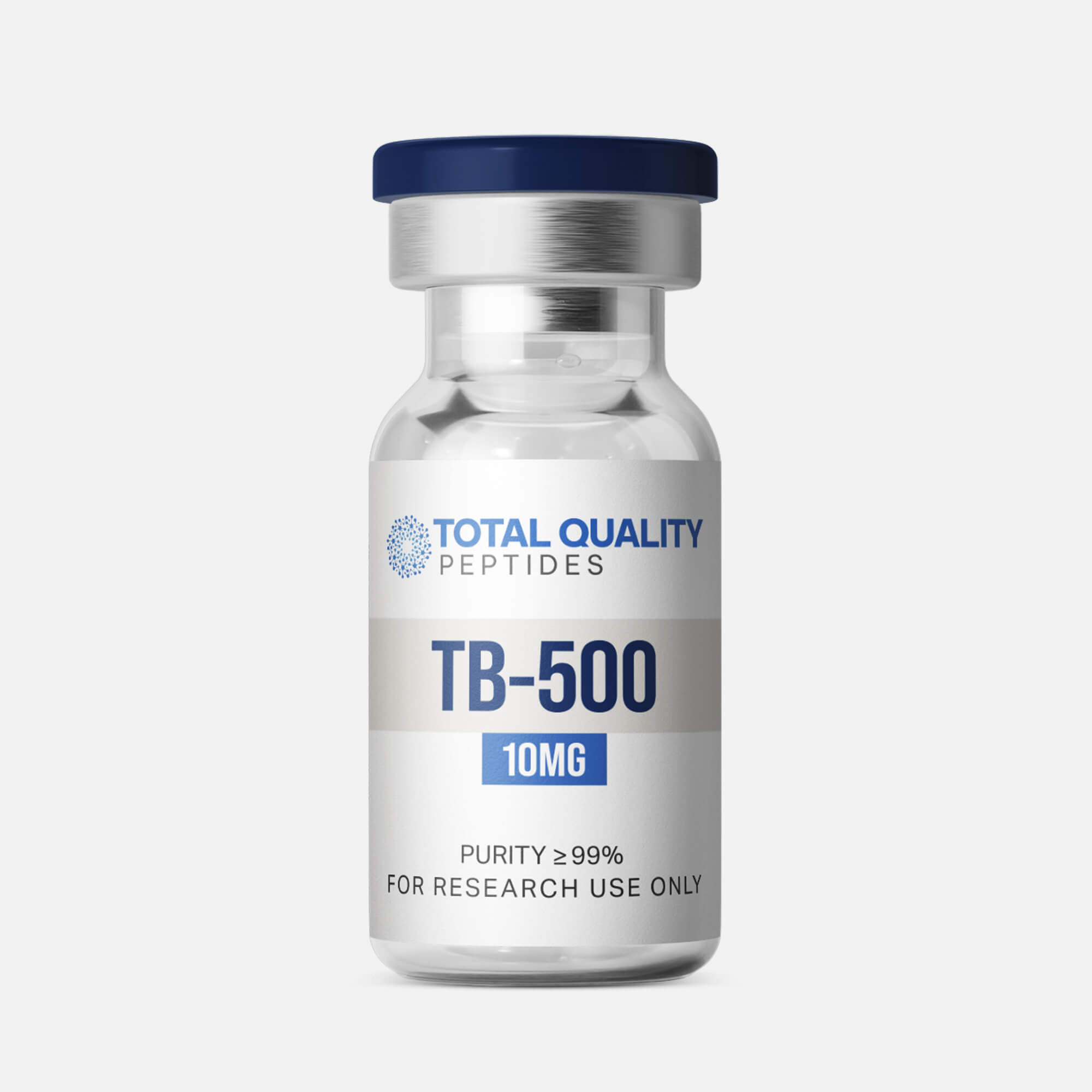
Peptide: TB-500 (Synthetic Thymosin Beta-4)
- Form: Lyophilized (freeze-dried) powder
- Amino Acid Count: 43 (peptide length)
- Solubility: Highly soluble in water
- Origin: Synthetic analog of naturally occurring thymosin beta-4
- Storage: Store lyophilized powder at -20°C. Once reconstituted, store at 2–8°C and use within 30 days.
- Intended Use: For laboratory and research purposes only. Not for human consumption.
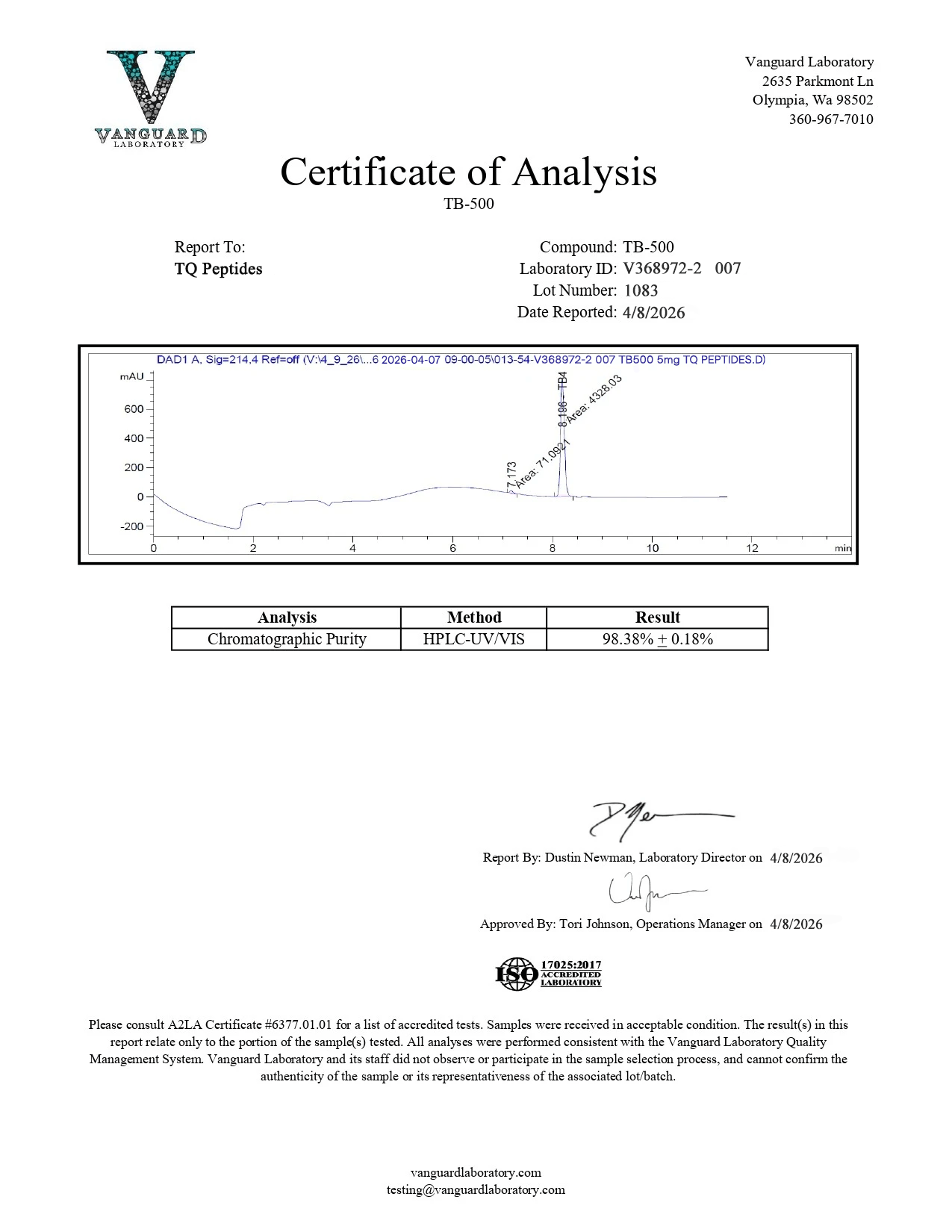
- Third-party tested with Certificate of Analysis available.
What Is TB-500?
TB-500 is a synthetic peptide composed of 43 amino acids. It is a synthetic analog of thymosin beta-4 (Tβ4), a protein commonly found in thymus cells and encoded by the TMSB4X gene. Thymosin beta-4 appears widely throughout the mammalian body and exists in almost all nucleated cells. It is detectable both intracellularly and extracellularly, including in blood plasma and wound fluid, where it is abundant and often found alongside blood platelets.
Following this overview, it is important to note that TB-500 mimics the structure of thymosin beta-4 and is used in research as a synthetic analog to investigate the biological activities of the endogenous protein. These areas of investigation include cellular migration, wound healing, angiogenesis, anti-inflammatory signaling, cardiac repair, hair follicle stimulation, and corneal tissue recovery.
A defining structural feature of TB-500 is the peptide segment LKKTETQ at residues 17–23, which is hypothesized to serve as the primary functional site responsible for actin binding and the downstream effects on cell motility. This short sequence is considered by researchers to be the molecular engine driving many of the peptides’ observed activities in preclinical models.
TB-500 is provided as a lyophilized powder at greater than 99% purity, as determined by independent high-performance liquid chromatography and mass spectrometry analysis specifically conducted for research quality control purposes.
Full Amino Acid Sequence:
Ac-Ser-Asp-Lys-Pro-Asp-Met-Ala-Glu-Ile-Glu-Lys-Phe-Asp-Lys-Ser-Lys-Leu-Lys-Lys-Thr-Glu-Thr-Gln-Glu-Lys-Asn-Pro-Leu-Pro-Ser-Lys-Glu-Thr-Ile-Glu-Gln-Glu-Lys-Gln-Ala-Gly-Glu-Ser-OH
The Actin Connection: How TB-500 Works at the Cellular Level
According to research literature, the central mechanism proposed for TB-500 centers on its interaction with actin, one of the most abundant and essential structural proteins in the cell, as investigated in experimental models.
Actin is found in two forms. Laboratory models describe globular actin (G-actin) as a soluble monomer and filamentous actin (F-actin) as cytoskeletal fibers. The conversion of G-actin to F-actin is considered a key step in shaping how cells look, move, and signal.
TB-500 has been observed in experimental research to bind specifically to G-actin via its LKKTETQ site. This process, called actin sequestration in research studies, may increase free G-actin in the cell and alter cytoskeleton assembly. The regulation of actin observed in such research is posited to underlie TB-500’s effects on cell movement, migration, and organization.
In preclinical studies of wound healing and tissue repair, cellular motility is recognized as critical. Cells migrate to wound sites, reorganize into new tissue structures, and coordinate to rebuild damaged architecture. By potentially modulating the actin dynamics that govern such migration in experimental systems, TB-500 may create conditions more favorable for cellular-level tissue repair, as noted in research.
Additionally, research has identified thymosin beta-4 not only intracellularly but also in the extracellular environment, including blood plasma and wound fluid. Preliminary studies with vascular cells have suggested that extracellular thymosin beta-4 may interact with ATP synthase enzymes on the cell surface, which are critical for cellular energy production. This indicates that TB-500’s potential mechanisms of action may extend beyond intracellular actin regulation to include extracellular signaling processes relevant to angiogenesis and tissue remodeling.
TB- 500 Preclinical Research Overview
TB-500 has been studied across a broad range of preclinical models and limited clinical investigations. Below is a summary of studies as organized by research domain.
TB-500 and Anti-Inflammatory Activity
One of the best-documented mechanisms studied for TB-500 beyond actin regulation is its potential influence on inflammatory signaling pathways, as reported in lab-based and preclinical studies.
Research observations in cell and animal models have demonstrated that TB-500 (via thymosin beta-4) may upregulate microRNA-146a (miR-146a), a small non-coding RNA that functions as a suppressor of inflammatory cascades. Specifically, miR-146a is believed to target and inhibit two key adaptor proteins in the innate immune signaling pathway: IL-1 receptor-associated kinase 1 (IRAK1) and tumor necrosis factor receptor-associated factor 6 (TRAF6). Both IRAK1 and TRAF6 are upstream mediators of the NF-κB inflammatory pathway, and their suppression in preclinical settings may result in a broad dampening of pro-inflammatory cytokine production.
Investigators working with experimental research systems confirmed the specificity of this mechanism by demonstrating that transfection with anti-miR-146a nucleotides reversed the inhibitory effect of thymosin beta-4 on IRAK1 and TRAF6—establishing, in these models, that the anti-inflammatory action was mediated through the miR-146a pathway rather than a nonspecific mechanism.
This anti-inflammatory potential is considered significant in research contexts because chronic or excessive inflammation is a major impediment to tissue repair across almost every organ system. By potentially modulating inflammatory signaling at the molecular level in laboratory and preclinical studies, TB-500 may create a more permissive environment for healing processes that its actin-regulatory functions are hypothesized to promote in experimental models.
TB-500 and Acute Wound Healing
The earliest and most foundational TB-500 wound-healing study was conducted in 1999 using experimentally induced wounds in mice. Subjects were divided into two groups — one receiving TB-500 and the other receiving saline as a control. Results and conclusions from this research are specific to this animal model and may not directly apply to human contexts.
According to this mouse model study, at day four, subjects who received TB-500 reportedly showed a 41% increase in re-epithelialization—the formation of new epithelial cells to resurface the wound—compared with saline controls. By day seven, wounds in the TB-500 group had contracted by at least 11% more than in the control group. Histological analysis suggested TB-500 may have promoted angiogenesis and collagen deposition at the wound site, supporting accelerated repair in this preclinical setting.
The study authors concluded that their results suggest thymosin beta-4 is a potent wound-healing factor with multiple activities—a characterization reinforced by subsequent research across multiple preclinical wound types and models.
TB-500 and Chronic Wound Healing
Building on acute wound findings from animal studies, researchers expanded their investigations to chronic and impaired wound models in laboratory animals — conditions designed to simulate healing delays or impairments caused by underlying pathology.
Studies were conducted across animal models representing normal, diabetic, aged, and corticosteroid-influenced biological states. All models received full-thickness punch wounds followed by TB-500 presentation. TB-500 reportedly accelerated wound healing across all test models, regardless of pre-existing conditions that impair normal repair.
Phase 2 clinical trials tested TB-500 in subjects with severe ulcers. Investigators noted that TB-500 appeared to accelerate healing by up to 1 month compared with placebo. This modest clinical trial context is a meaningful difference for ulcers that can last many months or need surgery.
These chronic wound findings in both preclinical animal models and clinical studies are notable because they suggest TB-500’s potential healing actions are not limited to healthy tissue. The peptide appeared to retain its potential even in compromised biological environments where multiple factors work against healing, according to research.
TB-500 and Heart / Cardiac Tissue
Cardiac tissue research is one of the most actively investigated areas for TB-500, with findings derived largely from animal experiments spanning pulmonary hypertension, myocardial resilience, and cardiac cell regeneration.
In experimental models of monocrotaline-induced pulmonary hypertension—a progressive cardiac condition in which elevated pulmonary arterial pressure increases right ventricular workload—TB-500 was reported to act on the Notch3-Col3A-CTGF gene axis. This action appeared to result in a significant decrease in right ventricular cardiomyocyte hypertrophy, suggesting a potential cardioprotective role in animal models of elevated pulmonary vascular resistance.
Researchers working with cell cultures and animal models have proposed that TB-500 may help heart cells survive under low-oxygen conditions and promote blood vessel growth in heart tissue. Another finding is that, in these preclinical settings, cardiac fibroblasts may transform into heart-muscle-like cells in the presence of TB-500—a process that, if confirmed, suggests the heart could partially repair itself from within, based on model system data.
Experimentation with mouse models of coronary artery ligation indicated that TB-500 may increase the activity of integrin-linked kinase (ILK) and protein kinase B (Akt) in cardiac tissue. These kinases, central to cell survival signaling, appeared to be more active in animal cardiac tissue treated with TB-500, which correlated with improved early cardiomyocyte survival and function in these experimental models.
Investigators have proposed in preclinical research settings that TB-500, when combined with cardiac reprogramming techniques, could synergistically reduce cardiac cell damage and support regeneration by activating intrinsic progenitor cells within the heart. Further research in model systems has suggested that TB-500 may facilitate the migration of myocardial and endothelial cells in the fetal heart, and that this migratory capacity is preserved in adult cardiomyocytes observed in animal experiments.
TB-500 and Hair Follicle Growth
An unexpected but consistently replicated finding in TB-500 research is its apparent influence on hair growth. In murine studies, TB-500 was administered, and its effects on the skin and hair follicles were examined histologically.
Researchers reported that TB-500 appeared to increase the number of hair shafts and hair follicles in treated skin samples compared with controls. Real-time PCR and western blotting techniques revealed changes in mRNA expression between TB-500 and control subjects — specifically, elevated mRNA and protein levels associated with hair growth signaling pathways in the TB-500 group.
While hair growth was not the original research focus of TB-500 investigations, these findings are consistent with the peptide’s broader profile of promoting cellular migration, proliferation, and tissue regeneration. Hair follicle cycling involves many of the same cellular processes — stem cell activation, angiogenesis, cell migration, and tissue remodeling — that TB-500 has been studied for in other contexts.
TB-500 and Angiogenesis / Blood Vessel Formation
Angiogenesis, the formation of new blood vessels from existing vasculature is a recurring theme across TB-500 research and is considered central to many of the peptide’s observed effects in wound healing, cardiac repair, and tissue regeneration models.
The most detailed investigation into TB-500’s angiogenic mechanisms employed lentiviral vector overexpression in human umbilical vein endothelial cells (HUVECs) alongside murine critical limb ischemia (CLI) models. Researchers used a comprehensive set of molecular tools, including MTT assays for cell viability, tube formation assays for angiogenic capacity, wound healing assays for migratory ability, and Western blotting, quantitative PCR, immunofluorescence, and immunohistochemistry for molecular characterization.
Preliminary findings from this research indicated that TB-500 may enhance:
- Cell viability, angiogenesis, and migration of HUVECs: suggesting direct pro-angiogenic action on endothelial cells
- Expression of angiopoietin-2 (Ang2) and TEK receptor tyrosine kinase 2 (tie2): key regulators of vascular remodeling and blood vessel maturation
- Vascular endothelial growth factor A (VEGFA): the primary molecular driver of new blood vessel formation
- NOTCH1 intracellular domain (N1ICD) and Notch receptor 3 (Notch3): components of the Notch signaling pathway involved in cell fate determination and vascular development
- NF-κB and phosphorylated p65 (p-p65): elements of the NF-κB pathway that coordinate inflammatory and proliferative responses
In murine CLI muscle tissues, similar increases were observed in CD31, α-smooth muscle actin (α-SMA), Ang2, tie2, VEGFA, N1ICD, and p-p65 suggesting that TB-500’s angiogenic effects observed in vitro may translate to in vivo tissue environments.
Notably, when pathway-specific inhibitors were applied DAPT for the Notch pathway and BMS for the NF-κB pathway. The actions of TB-500 appeared to be counteracted. This reversal suggested that TB-500’s pro-angiogenic mechanisms may be specifically mediated through the Notch and NF-κB signaling axes, providing researchers with defined molecular targets for further investigation.
TB-500 and Corneal Tissue Healing
An emerging area of TB-500 research examines its potential role in corneal wound recovery and ocular tissue protection.
Studies have posited that TB-500 may modulate cytokine production in corneal wound models, potentially accelerating the healing process through multiple parallel mechanisms:
- Pro-inflammatory cytokine regulation — Following corneal injury, TB-500 appeared to promote increased expression of IL-1β and IL-6 mRNA, suggesting early-phase inflammatory signaling that may initiate the healing cascade.
- Neutrophil infiltration reduction — After alkali injury, TB-500 appeared to decrease the expression of chemoattractants MIP-2 and KC for polymorphonuclear neutrophils (PMNs), potentially resulting in diminished PMN infiltration and reduced inflammatory tissue damage.
- NF-κB pathway modulation — TB-500 is speculated to influence NF-κB signaling pathways in corneal tissue, possibly contributing to anti-inflammatory actions that complement its pro-healing effects.
- Anti-apoptotic properties — TB-500 overexpression in cellular models increased growth rates, reduced basal apoptosis (programmed cell death), and conferred resistance to cell death-inducing factors. In corneal epithelial cells specifically, TB-500 may inhibit apoptosis by blocking caspases and curtailing the release of the pro-apoptotic protein Bcl-2 from mitochondria.
- Akt survival kinase activation — The anti-apoptotic mechanism of TB-500 may operate through complex interactions involving PINCH and integrin-linked kinase (ILK), ultimately activating the Akt survival pathway — a master regulator of cell survival signaling.
These corneal findings extend TB-500’s research profile into ocular biology and suggest that the peptide’s combination of anti-inflammatory, pro-migratory, and anti-apoptotic properties may be particularly relevant to tissues where rapid, scarless healing is critical.
Summary of Key Research Areas
- Actin Regulation — G-actin sequestration via LKKTETQ active site, modulation of cytoskeletal dynamics, enhanced cellular motility
- Anti-Inflammatory Activity — miR-146a upregulation, IRAK1/TRAF6 suppression, NF-κB pathway dampening
- Acute Wound Healing — 41% increase in re-epithelialization at day 4, 11% greater wound contraction at day 7, enhanced collagen deposition, and angiogenesis
- Chronic Wound Healing — Accelerated repair across diabetic, aged, and corticosteroid-compromised models; Phase 2 clinical trials showed healing acceleration of up to one month in ulcer subjects
- Cardiac Tissue — Cardioprotection in pulmonary hypertension models, myocardial resilience under hypoxia, ILK/Akt activation, potential fibroblast-to-cardiomyocyte differentiation
- Hair Follicle Growth — Increased hair shafts and follicle counts, elevated mRNA and protein expression related to hair growth signaling
- Angiogenesis — VEGFA/Ang2/tie2 upregulation, Notch and NF-κB pathway mediation, enhanced endothelial cell viability and migration.
- Corneal Tissue — Cytokine modulation, reduced neutrophil infiltration, NF-κB pathway influence, caspase inhibition, Akt survival kinase activation
Handling and Reconstitution
- Store lyophilized powder at -20°C for long-term stability.
- Reconstitute with bacteriostatic water or sterile water for injection.
- TB-500 is highly soluble in water owing to its molecular structure
- Once reconstituted, store at 2–8°C (refrigerator temperature)
- Use the reconstituted solution within 30 days.
- Avoid repeated freeze-thaw cycles.
- Handle with appropriate laboratory safety protocols.
Quality Assurance
- Purity verified at >99% by high-performance liquid chromatography (HPLC)
- Identity confirmed by mass spectrometry (MS)
- Certificate of Analysis (COA) available for every batch
- Third-party tested for purity, identity, and consistency.
- Supplied as lyophilized (freeze-dried) powder for maximum stability
Frequently Asked Questions
What is TB-500?
TB-500 is a synthetic peptide consisting of 43 amino acids. It is a man-made analog of thymosin beta-4 (Tβ4), a naturally occurring protein found abundantly in cells throughout the body and encoded by the TMSB4X gene. TB-500 has been studied in preclinical research for potential roles in wound healing, anti-inflammatory activity, cardiac repair, angiogenesis, hair growth, and corneal tissue recovery.
What is the difference between TB-500 and Thymosin Beta-4?
Thymosin beta-4 is a naturally occurring protein found in the body. TB-500 is its synthetic analog, manufactured for research purposes. They share the same amino acid sequence, and research on thymosin beta-4 is generally considered applicable to TB-500 as a synthetic proxy.
What is the LKKTETQ sequence?
LKKTETQ is a seven-amino-acid segment at residues 17–23 of the TB-500 peptide. It is hypothesized to be the primary active site responsible for actin binding and the downstream effects on cellular motility, migration, and wound healing. Researchers consider this segment the molecular engine behind many of TB-500’s observed activities.
How does TB-500 potentially promote healing?
The primary proposed mechanism is through G-actin sequestration — TB-500 binds to globular actin monomers, modulating the cellular cytoskeleton and enhancing cell motility and migration. Additional proposed mechanisms include miR-146a-mediated anti-inflammatory activity, VEGFA/Notch/NF-κB-mediated angiogenesis, and Akt survival kinase activation for cell protection.
What areas of research has TB-500 been studied in?
Acute and chronic wound healing, anti-inflammatory signaling, cardiac tissue protection and regeneration (including pulmonary hypertension and myocardial resilience), hair follicle growth, angiogenesis and blood vessel formation, and corneal tissue healing.
Has TB-500 been used in clinical trials?
Yes. Phase 2 clinical trials have been conducted in subjects with stasis and pressure ulcers, in which TB-500 (as thymosin beta-4) reportedly accelerated healing by up to 1 month compared with placebo.
Is TB-500 soluble?
Yes. TB-500 is highly soluble in water, making reconstitution easier for research applications.
What is the purity of this product?
Greater than 99%, verified by third-party HPLC and mass spectrometry. A Certificate of Analysis is available for every batch.
What sizes are available?
5mg and 10mg.
How should I store this product?
Store lyophilized powder at -20°C. Once reconstituted, store at 2–8°C and use within 30 days. Avoid repeated freeze-thaw cycles.
What is this product intended for?
This product is intended for laboratory and research purposes only. It is not intended for human consumption, therapeutic use, or diagnostic purposes.
References
- Kleinman, H. K., & Sosne, G. (2016). Thymosin β4 Promotes Dermal Healing. Vitamins and Hormones, 102, 251–275. https://doi.org/10.1016/bs.vh.2016.04.005
- Ho, E. N., Kwok, W. H., Lau, M. Y., Wong, A. S., Wan, T. S., Lam, K. K., Schiff, P. J., & Stewart, B. D. (2012). Doping control analysis of TB-500, a synthetic version of an active region of thymosin β₄, in equine urine and plasma by liquid chromatography-mass spectrometry. Journal of Chromatography A, 1265, 57–69. https://doi.org/10.1016/j.chroma.2012.09.043
- Gurtner, G. C., Werner, S., Barrandon, Y., & Longaker, M. T. (2008). Wound repair and regeneration. Nature, 453(7193), 314–321. https://doi.org/10.1038/nature07039
- Santra, M., Zhang, Z. G., Yang, J., Santra, S., Santra, S., Chopp, M., & Morris, D. C. (2014). Thymosin β4 up-regulation of microRNA-146a promotes oligodendrocyte differentiation and suppression of the Toll-like proinflammatory pathway. The Journal of Biological Chemistry, 289(28), 19508–19518. https://doi.org/10.1074/jbc.M113.529966
- Malinda, K. M., et al. (1999). Thymosin β4 Accelerates Wound Healing. Journal of Investigative Dermatology, 113(3), 364–368. https://doi.org/10.1046/j.1523-1747.1999.00708.x
- Treadwell, T., Kleinman, H. K., Crockford, D., Hardy, M. A., Guarnera, G. T., & Goldstein, A. L. (2012). The regenerative peptide thymosin β4 accelerates dermal healing in preclinical animal models and in patients. Annals of the New York Academy of Sciences, 1270(1), 37–44. https://doi.org/10.1111/j.1749-6632.2012.06717.x
- Wei, C., Kim, I. K., Li, L., Wu, L., & Gupta, S. (2014). Thymosin Beta 4 protects mice from monocrotaline-induced pulmonary hypertension and right ventricular hypertrophy. PLoS ONE, 9(11), e110598. https://doi.org/10.1371/journal.pone.0110598
- Srivastava, D., Ieda, M., Fu, J., & Qian, L. (2012). Cardiac repair with thymosin β4 and cardiac reprogramming factors. Annals of the New York Academy of Sciences, 1270, 66–72. https://doi.org/10.1111/j.1749-6632.2012.06696.x
- Bock-Marquette, I., Saxena, A., White, M. D., Dimaio, J. M., & Srivastava, D. (2004). Thymosin beta4 activates integrin-linked kinase and promotes cardiac cell migration, survival, and cardiac repair. Nature, 432(7016), 466–472. https://doi.org/10.1038/nature03000
- Gao, X. Y., Hou, F., Zhang, Z. P., et al. (2016). Role of thymosin beta 4 in hair growth. Molecular Genetics and Genomics, 291, 1639–1646. https://doi.org/10.1007/s00438-016-1210-1
- Huff, T., Müller, C. S., Otto, A. M., Netzker, R., & Hannappel, E. (2001). Beta-thymosins are small acidic peptides with multiple functions. The International Journal of Biochemistry & Cell Biology, 33(3), 205–220. https://doi.org/10.1016/s1357-2725(00)00087-x
- Freeman, K. W., Bowman, B. R., & Zetter, B. R. (2011). Regenerative protein thymosin beta-4 is a novel regulator of purinergic signaling. FASEB Journal, 25(3), 907–915. https://doi.org/10.1096/fj.10-169417
- Lv, S., Cai, H., Xu, Y., Dai, J., Rong, X., & Zheng, L. (2020). Thymosin-β4 induces angiogenesis in mice with critical limb ischemia by regulating the Notch/NF-κB pathway. International Journal of Molecular Medicine, 46(4), 1347–1358. https://doi.org/10.3892/ijmm.2020.4701
- Sosne, G., Qiu, P., & Kurpakus-Wheater, M. (2007). Thymosin beta 4: A novel corneal wound healing and anti-inflammatory agent. Clinical Ophthalmology, 1(3), 201–207.
Disclaimer
This product is sold for research and laboratory use only. It is not a drug, food, cosmetic, or supplement. It is not intended to diagnose, treat, cure, or prevent any disease or medical condition. It is not approved for human or veterinary use. The information provided on this page is drawn from published preclinical and clinical research literature and is presented for informational purposes only. Researchers are responsible for ensuring compliance with all applicable regulations governing the purchase, handling, and use of research peptides in their jurisdiction.
All products sold by TQ Peptides are intended strictly for laboratory research, analytical testing, and in vitro experimental purposes only. These products are not intended for human or animal consumption.
TQ Peptides operates solely as a research chemical supplier and is not a compounding pharmacy or chemical compounding facility as defined under Section 503A of the Federal Food, Drug, and Cosmetic Act. Additionally, TQ Peptides is not classified as an outsourcing facility under Section 503B of the same Act.
The statements made on this website have not been evaluated by the U.S. Food and Drug Administration (FDA). Products sold by TQ Peptides are not intended to diagnose, treat, cure, or prevent any disease.