Product Specifications
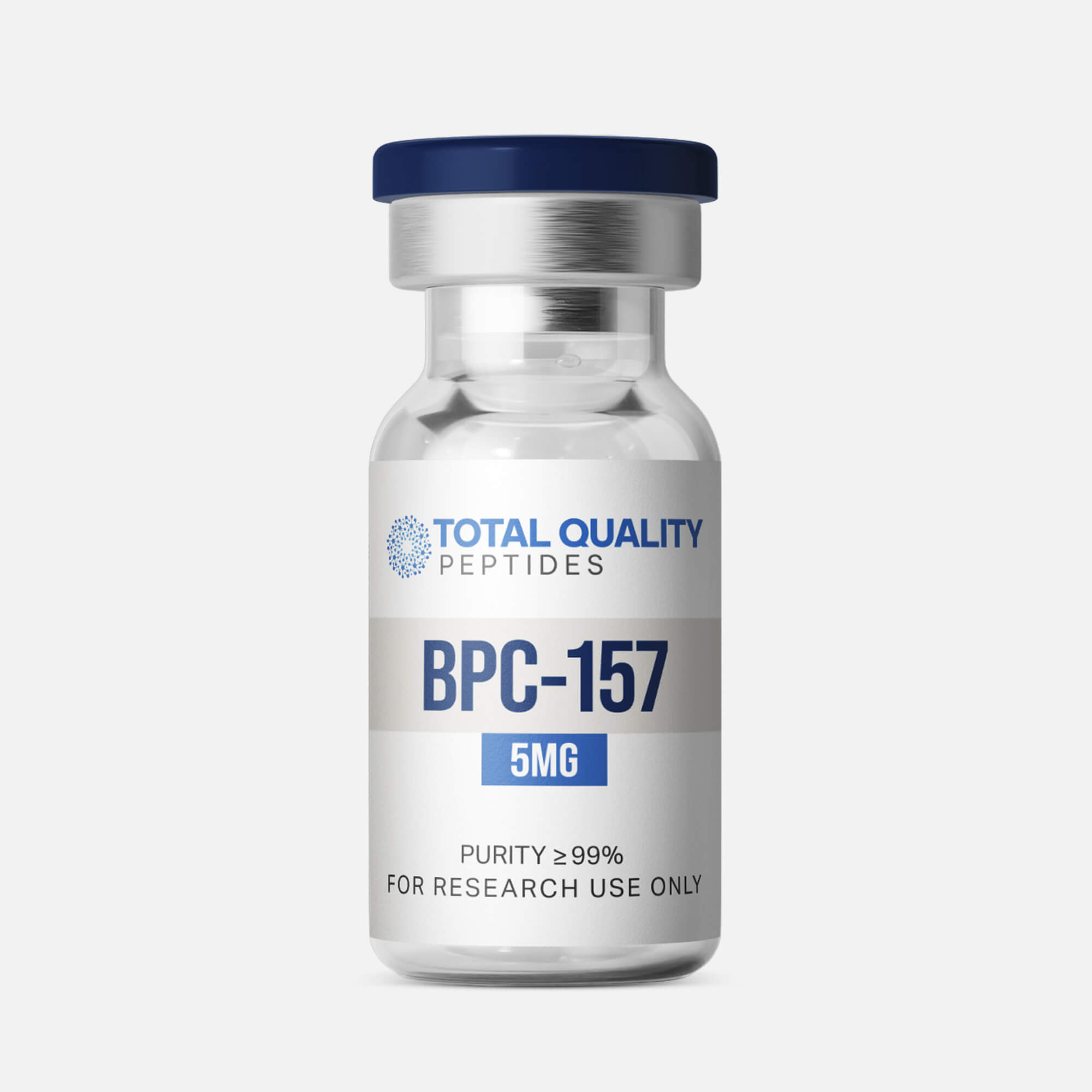
- Peptide: BPC-157 (Body Protection Compound-157)
- Other Designations: Pentadecapeptide BPC 157, PL-10, PL 14736, Bepecin
- Available Sizes: 5mg and 10mg
- Form: Lyophilized (freeze-dried) powder
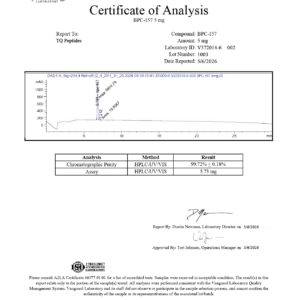
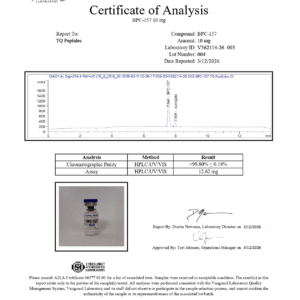
- Purity: >99%
- Amino Acid Count: 15
- Molecular Formula: C₆₂H₉₈N₁₆O₂₂
- Molecular Weight: 1419.55 g/mol
- Origin: Wholly synthetic — does not occur naturally in this specific sequence
- Storage: Store lyophilized powder at -20°C. Once dissolved in liquid (reconstituted), store at 2–8°C and use within 30 days.
- Intended Use: For laboratory and research purposes only. Not for human consumption.
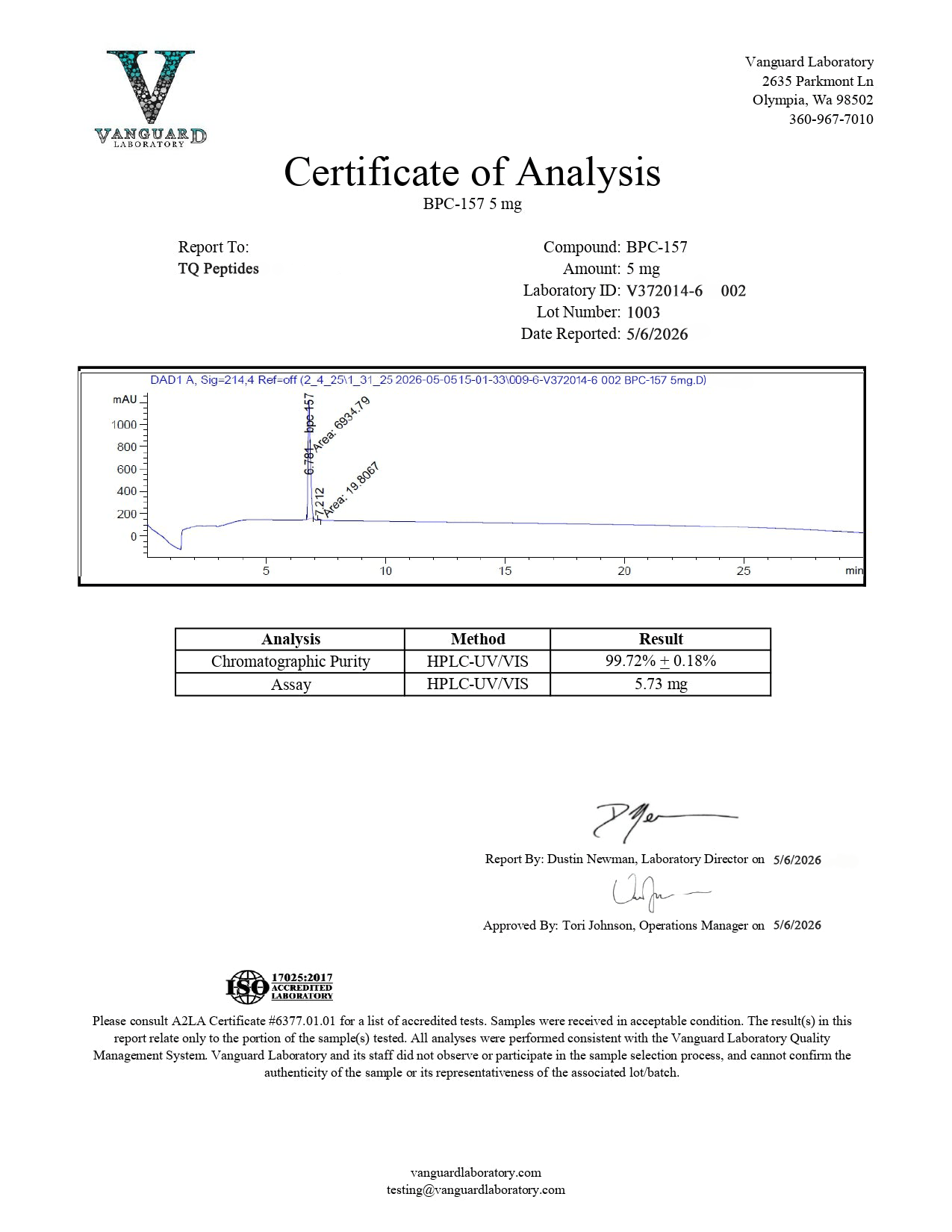
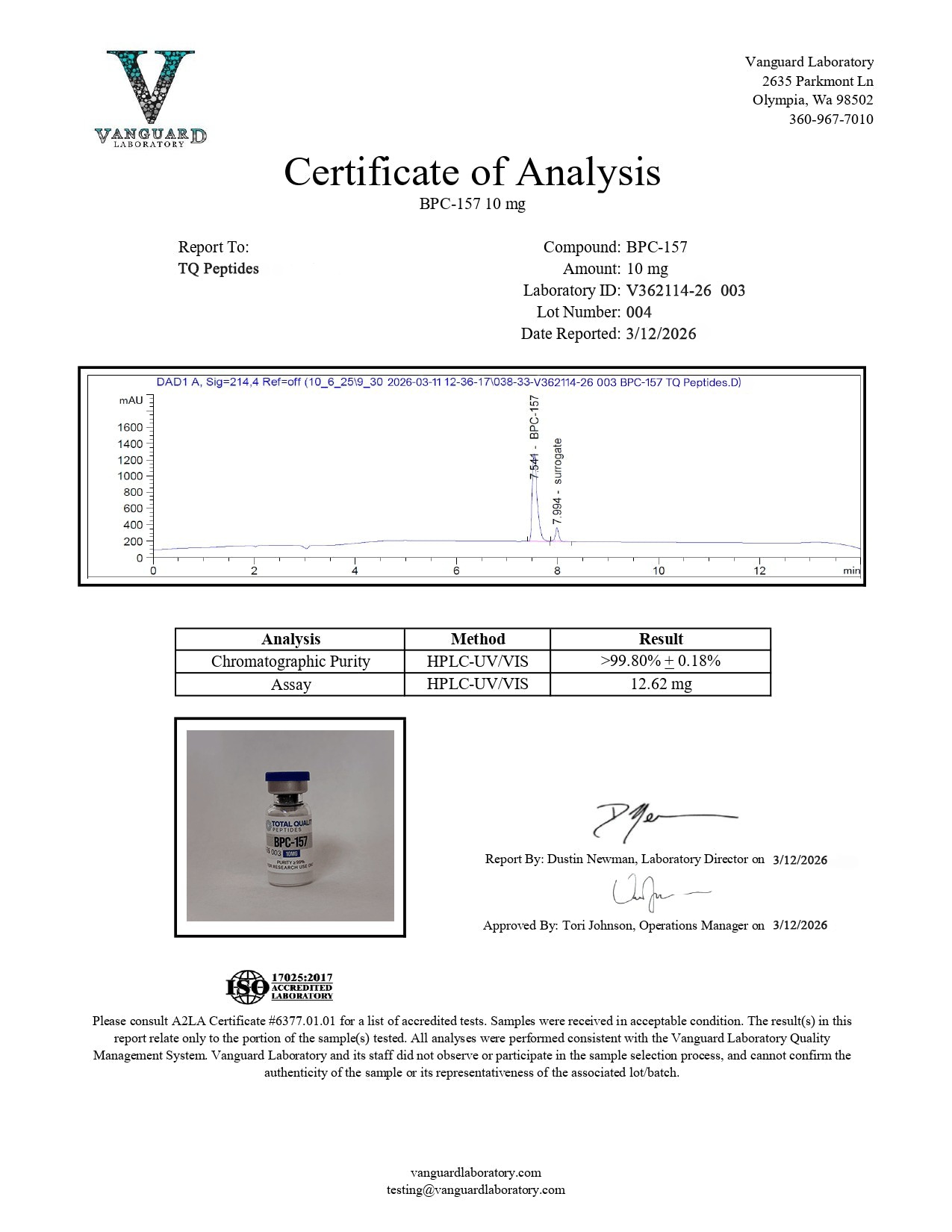
- Third-party tested with Certificate of Analysis available.
What Is BPC-157?
BPC-157 is a man-made small protein chain made of 15 building blocks (amino acids). It is not found in the body in this exact form, but it comes from a piece of a protein in human stomach juice. Scientists first found it because it seemed to protect the stomach lining, which is why it’s called “Body Protection Compound.”
Since its initial identification, BPC-157 has remained the focus of extensive preclinical research for its possible roles in wound healing, connective tissue repair, gastrointestinal protection, neurotransmitter modulation, and organ damage mitigation. This extensive research highlights the compound’s broad investigative appeal and its potential for use in diverse regenerative research settings.
We provide BPC-157 as a freeze-dried powder that is more than 99% pure. Outside labs test it using special machines to ensure its purity.
Preclinical Research Overview
Published literature on BPC-157 covers multiple areas of investigation. The summary below highlights key research domains and findings reported in peer-reviewed studies.
BPC-157 and Wound Healing
Wound healing represents the most extensively studied application of BPC-157 in preclinical models. Numerous studies have explored the peptide’s capacity to accelerate repair of skin, mucosal, and organ tissues via several interconnected mechanisms.
In one foundational study, three experimental models were used — skin tissue wounds, colon tissue anastomosis, and synthetic sponge implantation. Subjects treated with BPC-157 reportedly showed significantly greater numbers of collagen fibers, reticulin fibers, and newly formed blood vessels on histological examination than placebo controls. These findings suggested that BPC-157 may enhance both the structural rebuilding and vascularization phases of wound repair.
Subsequent studies suggest BPC-157 may upregulate VEGF expression and promote endothelial cell migration and vascular development, supporting wound healing.
Researchers reported BPC-157 may affect signaling proteins involved in cell growth, migration, and vessel formation, helping coordinate wound healing.
BPC-157 and Tendon Healing
Connective tissue repair—particularly tendon healing—has become another major research area for BPC-157. Investigations in this domain focus on how the peptide may influence tendon fibroblast behavior at the cellular level.
Studies show that BPC-157 promotes tendon fibroblast growth and survival under oxidative stress and may have cytoprotective effects.
BPC-157 may accelerate tendon fibroblast migration and stimulate F-actin formation, supporting connective tissue repair.
Research suggests BPC-157 may activate the FAK-paxillin pathway, promoting cell adhesion and migration without increasing total protein levels.
BPC-157 and Gastrointestinal Function
Given BPC-157’s origin from a gastric protein fragment, its potential effects on gastrointestinal function have remained a central focus of research.
BPC-157 has demonstrated consistent healing effects across multiple regions of the GI tract in preclinical studies.
Other studies explore BPC-157’s activity at the 5-HT2A receptor. This interaction is proposed as one way it may help protect the gastrointestinal tract.
BPC-157 and Tissue Damage / Organ Protection
Researchers have also studied BPC-157 for its potential to address tissue damage across various organ systems, suggesting the peptide may offer broad protection in preclinical research settings.
Studies in various organ injury models suggest BPC-157 may interact with several neurotransmitter and signaling systems, including dopamine, nitric oxide, and prostaglandins.
Researchers hypothesize that BPC-157 may counteract overactivation or inhibition in these systems, potentially providing broader protection than more targeted peptides.
BPC-157 and Muscle Healing
Several studies have examined the effects of BPC-157 on the recovery of damaged skeletal muscle tissue in preclinical research.
In one study, BPC-157 or a placebo was given after corticosteroid-induced muscle injury. Examinations occurred on days 1, 2, 4, 7, and 14.
BPC-157-treated subjects showed full muscle restoration and functional recovery by day 14, whereas placebo-treated subjects did not. Findings suggest BPC-157 may help muscle healing after corticosteroid damage.
BPC-157 and Dopamine System Interaction
Researchers have examined BPC-157 for its potential interaction with the dopaminergic system, exploring its possible modulatory effects in preclinical settings.
Studies found that BPC-157 appeared to reverse amphetamine-induced excitability and could counteract haloperidol-induced supersensitivity in experimental models.
These findings have positioned BPC-157 as a peptide with potential relevance to dopaminergic regulation — an area of research that extends beyond its more commonly studied roles in tissue repair and gastrointestinal protection.
BPC-157 and Central Nervous System / Traumatic Brain Injury
Among the more recent and potentially significant areas of BPC-157 research is its investigation in experimental models of traumatic brain injury (TBI).
In one preclinical study, BPC-157 was explored for its potential to reduce the severity of TBI-related damage. Researchers reported several notable observations in the BPC-157 group compared to controls. During the critical 24-hour period following experimentally induced injury, the BPC-157 group reportedly had minimal mortality. The severity of traumatic lesions commonly associated with TBI — including subarachnoid hemorrhage, intraventricular hemorrhage, brain laceration, and hemorrhagic laceration — appeared to be less pronounced in subjects that received the peptide.
Additionally, investigators observed a significant reduction in brain edema (swelling of brain tissue) in the BPC-157 group. The study further explored a prophylactic hypothesis: that if BPC-157 were administered before TBI, it might improve the ratio of conscious to unconscious to death states in experimental subjects. Findings suggested that immediate pre-injury presentation of BPC-157 may have mitigated some of the damage caused by the force impulse used to simulate TBI, hinting at possible preventive or neuroprotective properties.
While these findings remain preclinical and require further investigation, they represent a potentially important expansion of BPC-157’s research profile beyond its established associations with peripheral tissue repair and gastrointestinal function.
BPC-157 and Angiogenesis
Angiogenesis — the formation of new blood vessels from existing vasculature — is a recurring theme across nearly all areas of BPC-157 research. The peptide’s potential pro-angiogenic properties are considered central to many of its observed effects in tissue repair, wound-healing, and organ-protection models.
Researchers have proposed several mechanisms through which BPC-157 may promote angiogenesis:
- Nitric oxide (NO) system interaction — BPC-157 may engage with the NO mechanism, potentially providing endothelial protection and fostering the development of new circulatory pathways.
- VEGF upregulation — Studies have reported increased expression of vascular endothelial growth factor and its receptor (VEGFR2) in the presence of BPC-157, suggesting direct stimulation of the molecular machinery responsible for blood vessel formation.
- EGR-1 gene expression — BPC-157 may boost expression of the early growth response 1 gene, which is believed to play a role in cytokine and growth factor production involved in extracellular matrix assembly and collagen formation.
- Endothelial cell proliferation and migration — In vitro studies have demonstrated that BPC-157 may promote endothelial cell proliferation and migration, as well as the formation of vascular tubes.
The convergence of these angiogenic mechanisms is hypothesized to be one of the primary reasons BPC-157 has demonstrated potential across such a wide variety of tissue types and injury models — wherever new blood supply is needed for healing, the peptide appears to have a potential role.
Summary of Key Research Areas
- Wound Healing — Increased collagen deposition, reticulin fiber formation, blood vessel development, VEGF upregulation, ERK1/2 signaling modulation
- Tendon and Connective Tissue — Tendon fibroblast outgrowth, cell survival under oxidative stress, F-actin formation, FAK-paxillin pathway activation, enhanced cell migration
- Gastrointestinal Protection — Consistent healing across acute and chronic GI wounds (esophagus through lower GI tract), 5-HT2A receptor interaction, serotonin system modulation
- Organ and Tissue Protection — Potential peptidergic defense system action across pancreas, liver, heart, endothelium; counterregulation of dopamine, NO, prostaglandin, and somatosensory neuron system disruptions
- Muscle Recovery — Complete gastrocnemius restoration after corticosteroid-induced damage in a 14-day preclinical model
- Dopamine System — Reversal of amphetamine-induced excitability and haloperidol-induced supersensitivity
- Central Nervous System / TBI — Reduced mortality, reduced lesion severity, improved brain edema, potential prophylactic neuroprotection in TBI models
- Angiogenesis — NO system interaction, VEGF/VEGFR2 upregulation, EGR-1 gene expression, endothelial cell proliferation and migration
Handling and Reconstitution
- Store lyophilized powder at -20°C for long-term stability.
- Reconstitute with bacteriostatic water or sterile water for injection.
- Once reconstituted, store at 2–8°C (refrigerator temperature)
- Use the reconstituted solution within 30 days.
- Avoid repeated freeze-thaw cycles.
- BPC-157 is considered to have unusually high stability for a peptide — researchers have suggested it may resist degradation in gastric acid for a minimum of 24 hours
- Handle with appropriate laboratory safety protocols.
Quality Assurance
- Purity verified at >99% by high-performance liquid chromatography (HPLC)
- Identity confirmed by mass spectrometry (MS)
- Certificate of Analysis (COA) available for every batch
- Third-party tested for purity, identity, and consistency.
- Supplied as lyophilized (freeze-dried) powder for maximum stability
Frequently Asked Questions
What is BPC-157?
BPC-157 (Body Protection Compound-157) is a wholly synthetic peptide consisting of 15 amino acids, making it a pentadecapeptide. It is derived from a fragment of a protein found in human gastric juice, though the specific 15-amino-acid sequence does not occur naturally. It has been studied in hundreds of preclinical investigations for potential roles in wound healing, connective tissue repair, gastrointestinal protection, muscle recovery, neuroprotection, and angiogenesis.
Is BPC-157 natural or synthetic?
BPC-157 is entirely synthetic. While it is based on a fragment of a naturally occurring gastric protein, the specific pentadecapeptide sequence is man-made. It is also sometimes designated as PL-10, PL 14736, or Bepecin in the research literature.
What makes BPC-157 unusual among peptides?
Two things stand out in the literature. First, the breadth of its preclinical research portfolio — very few single peptides have been studied across as many different tissue types, organ systems, and injury models. Second, its reported stability — researchers have suggested that BPC-157 may withstand gastric acid degradation for at least 24 hours, which is uncommon for a peptide.
What areas of research has BPC-157 been studied in?
Published preclinical studies have investigated BPC-157 in the context of wound healing, tendon and ligament repair, gastrointestinal ulceration and protection, muscle recovery, organ damage (liver, pancreas, heart, endothelium), dopamine system interaction, traumatic brain injury, and angiogenesis.
How does BPC-157 potentially promote healing?
Multiple mechanisms have been proposed across different studies, including stimulation of collagen and blood vessel formation, upregulation of VEGF and EGR-1 gene expression, activation of the FAK-paxillin signaling pathway in tendon fibroblasts, interaction with the nitric oxide system, and modulation of inflammatory responses. The convergence of these angiogenic and tissue-repair mechanisms is hypothesized to account for the peptide’s broad preclinical profile.
What is the purity of this product?
Greater than 99%, verified by third-party HPLC and mass spectrometry. A Certificate of Analysis is available for every batch.
What form does this product come in?
Lyophilized (freeze-dried) powder in a sealed research vial.
What sizes are available?
5mg and 10mg.
How should I store this product?
Store lyophilized powder at -20°C. Once reconstituted, store at 2–8°C and use within 30 days. Avoid repeated freeze-thaw cycles.
What is this product intended for?
This product is intended for laboratory and research purposes only. It is not intended for human consumption, therapeutic use, or diagnostic purposes.
References
- Chang, C. H., et al. (2011). The promoting effect of pentadecapeptide BPC 157 on tendon healing involves tendon outgrowth, cell survival, and cell migration. Journal of Applied Physiology, 110(3), 774–780. https://doi.org/10.1152/japplphysiol.00945.2010
- Ormsbee, H. S., & Fondacaro, J. D. (1985). Action of serotonin on the gastrointestinal tract. Proceedings of the Society for Experimental Biology and Medicine, 178(3), 333–338. https://doi.org/10.3181/00379727-178-42016
- Sikiric, P., et al. (2016). Brain-Gut Axis and Pentadecapeptide BPC 157: Theoretical and Practical Implications. Current Neuropharmacology, 14(8), 857–865. https://doi.org/10.2174/1570159×13666160502153022
- Krivic, A., Majerovic, M., Jelic, I., et al. (2008). Modulation of early functional recovery of Achilles tendon to bone unit after transection by BPC 157 and methylprednisolone. Inflammation Research, 57, 205–210. https://doi.org/10.1007/s00011-007-7056-8
- Seiwerth, S., et al. (1997). BPC 157’s effect on healing. Journal de Physiologie (Paris), 91(3–5), 173–178. https://doi.org/10.1016/s0928-4257(97)89480-6
- Huang, T., Zhang, K., Sun, L., et al. (2015). Body protective compound-157 enhances alkali-burn wound healing in vivo and promotes proliferation, migration, and angiogenesis in vitro. Drug Design, Development and Therapy, 9, 2485–2499. https://doi.org/10.2147/DDDT.S82030
- Seiwerth, S., et al. (2018). BPC 157 and Standard Angiogenic Growth Factors. Gastrointestinal Tract Healing, Lessons from Tendon, Ligament, Muscle, and Bone Healing. Current Pharmaceutical Design, 24(18), 1972–1989. https://doi.org/10.2174/1381612824666180712110447
- Sikiric, P. (1999). The pharmacological properties of the novel peptide BPC 157 (PL-10). Inflammopharmacology, 7(1), 1–14. https://doi.org/10.1007/s10787-999-0022-z
- Pevec, D., et al. (2010). Impact of pentadecapeptide BPC 157 on muscle healing impaired by systemic corticosteroid application. Medical Science Monitor, 16(3), BR81–88. https://pubmed.ncbi.nlm.nih.gov/20190676/
- Jelovac, N., et al. (1998). A novel pentadecapeptide, BPC 157, blocks the stereotypy produced acutely by amphetamine and the development of haloperidol-induced supersensitivity to amphetamine. Biological Psychiatry, 43(7), 511–519. https://doi.org/10.1016/s0006-3223(97)00277-1
- Tudor, M., et al. (2010). Traumatic brain injury in mice and the effect of pentadecapeptide BPC 157. Regulatory Peptides, 160(1–3), 26–32. https://doi.org/10.1016/j.regpep.2009.11.012
- Gwyer, D., Wragg, N. M., & Wilson, S. L. (2019). Gastric pentadecapeptide body protection compound BPC 157 and its role in accelerating musculoskeletal soft tissue healing. Cell and Tissue Research, 377, 153–159. https://doi.org/10.1007/s00441-019-03016-8
- Hsieh, M. J., et al. (2017). The therapeutic potential of pro-angiogenic BPC157 is associated with VEGFR2 activation and up-regulation. Journal of Molecular Medicine, 95(3), 323–333. https://doi.org/10.1007/s00109-016-1488-y
- ClinicalTrials.gov. Phase I clinical trial in healthy volunteers to study the safety and pharmacokinetics of BPC-157, a pentadecapeptide from a gastric source. Identifier: NCT02637284. https://clinicaltrials.gov/ct2/show/NCT02637284
Disclaimer
This product is sold for research and laboratory use only. It is not a drug, food, cosmetic, or supplement. It is not intended to diagnose, treat, cure, or prevent any disease or medical condition. It is not approved for human or veterinary use. The information provided on this page is drawn from published preclinical and clinical research literature and is presented for informational purposes only. Researchers are responsible for ensuring compliance with all applicable regulations governing the purchase, handling, and use of research peptides in their jurisdiction.
All products sold by TQ Peptides are intended strictly for laboratory research, analytical testing, and in-vitro experimental purposes only. These products are not intended for human or animal consumption.
TQ Peptides operates solely as a research chemical supplier and is not a compounding pharmacy or chemical compounding facility as defined under Section 503A of the Federal Food, Drug, and Cosmetic Act. Additionally, TQ Peptides is not classified as an outsourcing facility under Section 503B of the same Act.
The statements made on this website have not been evaluated by the U.S. Food and Drug Administration (FDA). Products sold by TQ Peptides are not intended to diagnose, treat, cure, or prevent any disease.