Product Specifications
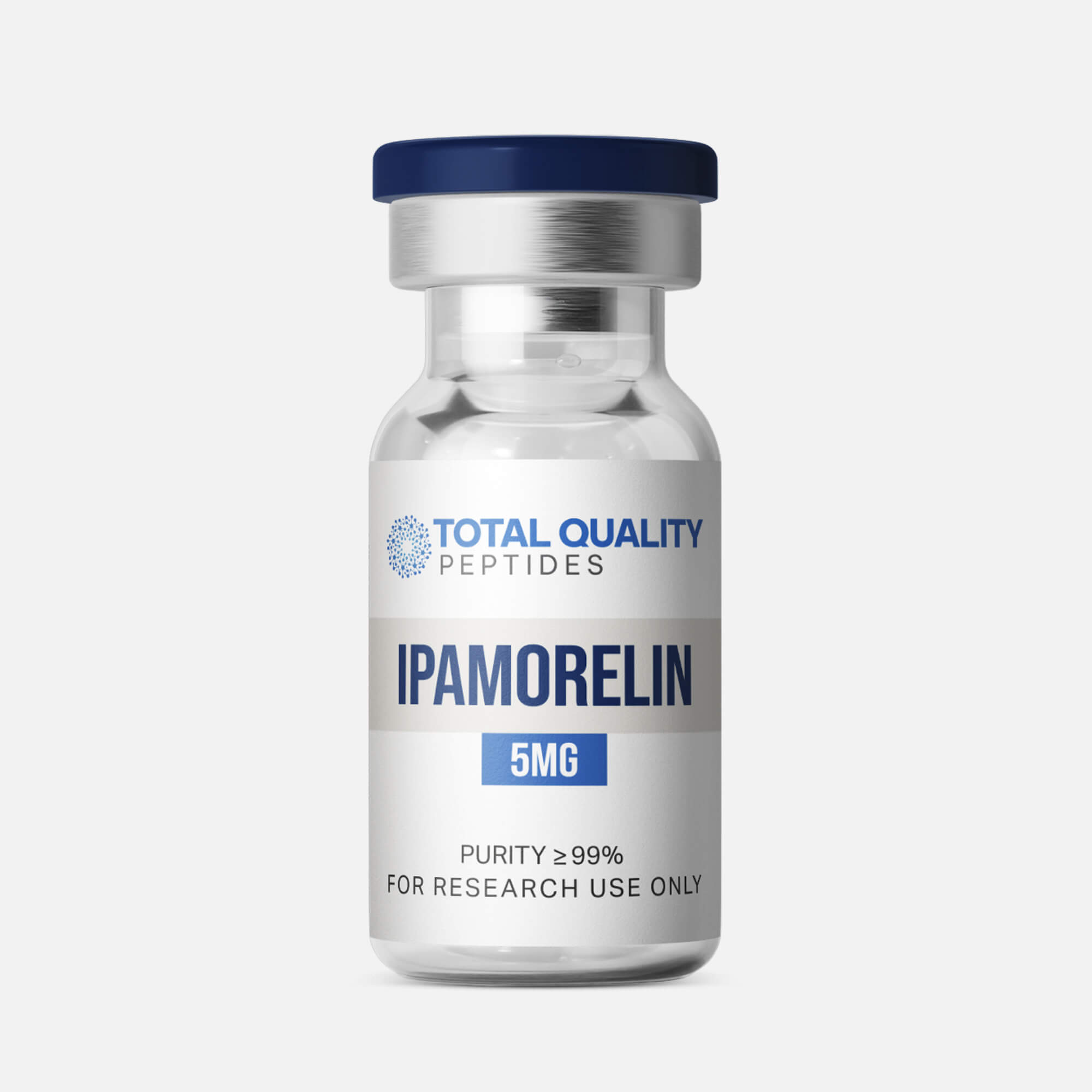
- Peptide: Ipamorelin
- Other Designations: NNC 26-0161
- Classification: Growth Hormone Secretagogue (GHS)
- Available Size: 5mg
- Form: Lyophilized (freeze-dried) powder
- Purity: >99%
- Amino Acid Count: 5
- Amino Acid Sequence: Aib-His-D-2-Nal-D-Phe-Lys-NH₂
- Molecular Formula: C₃₈H₄₉N₉O₅
- Molecular Weight: 711.86 g/mol
- Receptor Target: Growth Hormone Secretagogue Receptor (GHS-R / Ghrelin Receptor)
- Origin: Wholly synthetic
- Storage: Store lyophilized powder at -20°C. Once reconstituted, store at 2–8°C and use within 30 days.
- Intended Use: For laboratory and research purposes only. Not for human consumption.
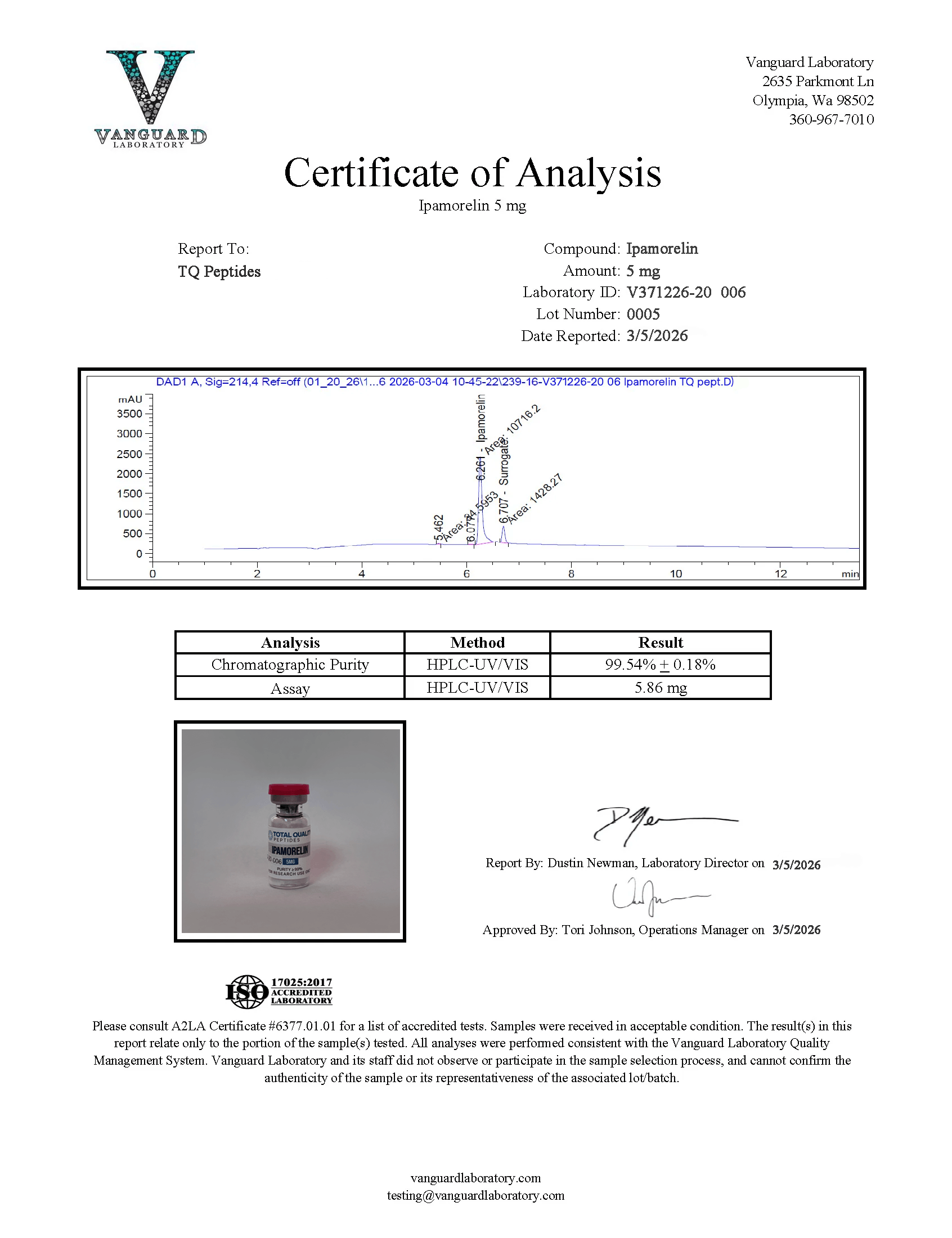
- Third-party tested with Certificate of Analysis available.
What Is Ipamorelin?
Ipamorelin is a synthetic pentapeptide made of five amino acids. It is classified as a growth hormone secretagogue (GHS). It was developed to stimulate the release of growth hormone (GH) from the anterior pituitary gland. This occurs when it binds to growth hormone secretagogue receptors (GHS-R), also known as ghrelin receptors.
Ipamorelin is distinguished from other growth hormone secretagogues by its selectivity. The research literature describes it as the first synthetic GHS to exhibit highly selective GH release. This suggests it stimulates GH production without significantly affecting other pituitary hormones, such as prolactin or adrenocorticotropic hormone (ACTH). This selectivity profile is unusual and especially valuable for research, as it lets investigators study isolated GH elevation effects without confounding changes in other hormonal axes.
Researchers describing Ipamorelin’s selectivity called it the first GHS-R agonist with selectivity for GH release, similar to GHRH. GHRH is the body’s natural growth hormone-releasing signal. This characterization is considered significant.
After Ipamorelin stimulates GH release, several effects may follow. These include fat breakdown (lipolysis), higher IGF-1 production, and more cell growth in bone and muscle tissue. IGF-1 likely mediates many of GH’s anabolic effects in the body.
We supply Ipamorelin as a lyophilized powder with over 99% purity, and third-party HPLC and mass spectrometry analysis verify this.
How Ipamorelin Works — Proposed Mechanism of Action
Ipamorelin likely acts by binding to growth hormone secretagogue receptors (GHS-R) on somatotroph cells in the anterior pituitary gland. Unlike GHRH analogs such as CJC-1295, which activate the GHRH receptor, Ipamorelin works through the ghrelin receptor pathway. This is a parallel but distinct route to GH secretion.
The signaling cascade following GHS-R binding proceeds through a pathway distinct from the cAMP-mediated cascade triggered by GHRH. When Ipamorelin binds to the ghrelin receptor, it likely activates phospholipase C (PLC). This generates two secondary messengers: inositol trisphosphate (IP3) and diacylglycerol (DAG).
IP3 likely triggers the release of calcium ions (Ca²⁺) from intracellular stores in the somatotroph cell. DAG seems to activate protein kinase C (PKC). Increased intracellular calcium and PKC activation together trigger the release of GH-containing vesicles into the bloodstream.
The PLC/IP3/DAG/Ca²⁺ pathway is fundamentally different from the Gs-protein/cAMP/PKA pathway used by GHRH analogs. This difference explains why Ipamorelin and GHRH analogs can be researched together for possible synergy. They activate separate receptors and cascades. Ipamorelin’s unique pathway also explains its selectivity. The ghrelin receptor pathway seems strongly linked to GH release, with little effect on other hormones.
Why Selectivity Matters
Ipamorelin’s selectivity allows it to stimulate GH release with little effect on prolactin, ACTH, cortisol, or other pituitary hormones. This is not just a technical distinction. It affects research design and the interpretation of results.
Many earlier growth hormone secretagogues, such as GHRP-2 and GHRP-6, elevated multiple hormones at once. While these compounds were effective at stimulating GH, they also introduced confounding variables into experiments. This made it difficult to link specific outcomes to GH elevation, as changes in cortisol, prolactin, and other hormones could also contribute.
Ipamorelin’s selectivity allows researchers to observe the effects of GH elevation in relative isolation. If a study with Ipamorelin shows changes in body composition, bone density, gastric function, or nitrogen balance, those results can be linked more directly to the GH/IGF-1 axis. Researchers do not have to account for as many changes in other hormones.
Because of its selectivity, Ipamorelin is viewed as an interesting candidate for future clinical development. Its clean pharmacological profile makes it easier to study GH stimulation and its effects.
Preclinical and Clinical Research Overview
Ipamorelin has been studied in many preclinical and clinical trials. The summary below sorts findings by research area.
Ipamorelin and Growth Hormone Release
A 1998 study first described Ipamorelin’s main properties. Researchers gave Ipamorelin to swine and anesthetized mice, observing that it stimulated GH release from the pituitary. They also noted that prolactin and ACTH levels did not rise simultaneously. These results confirmed Ipamorelin’s selective action as a GHS-R agonist.
A 1999 clinical trial in eight people quantified Ipamorelin’s GH-stimulating power. Subjects received Ipamorelin every 15 minutes for a set period. Two hours later, GH levels reportedly rose to about 80 mIU/L (or 26.6 ng/mL). The placebo baseline was 1.31 mIU/L (0.4 ng/mL). This shows more than a 60-fold increase, achieved solely through selective ghrelin receptor activation.
Ipamorelin and Bone Mineral Density
Because growth hormone affects bone metabolism and skeletal health, researchers have tested whether Ipamorelin’s GH-stimulating action affects bone tissue.
In one study, adult female mice were given either Ipamorelin or a placebo. Bone mineral density was monitored using DEXA at the femur and L6 vertebra. After the experiment, femur bones were further analyzed using pQCT scans.
The findings were notable:
- Ipamorelin appeared to contribute to increased body mass in the treated subjects.
- Total tibial and vertebral bone mineral content (BMC) appeared elevated compared to placebo, as measured by DEXA.
- pQCT analysis showed that the gain in cortical BMC resulted from a larger bone cross-sectional area rather than increased volumetric BMD.
- Volumetric BMD remained steady, while BMC increased. This indicates the bones grew larger (in volume), not denser per unit volume.
These findings suggest Ipamorelin’s GH-stimulating effect may change bone structure. It could lead to larger bones with greater mineral content. This may be important for skeletal integrity research.
Ipamorelin and Gastric Motility
A notable area of Ipamorelin research is its possible effect on gastrointestinal function—specifically, gastric emptying rate and smooth muscle contractility.
Researchers used a gastric emptying technique. They tracked how much of the marked substance remained in the mice’s stomachs 15 minutes after administration. Mice had surgeries to slow gastric motility, simulating postoperative ileus.
The results were clear: control subjects had significantly slowed gastric emptying, as expected. Subjects receiving Ipamorelin showed much faster gastric emptying. Follow-up experiments found that delayed peristalsis was reduced when Ipamorelin and ghrelin were combined. This suggests it may enhance gastric smooth muscle contractility through ghrelin receptor activation.
This research on gastric motility is important because it links Ipamorelin’s ghrelin receptor mechanism to an effect beyond GH release. The ghrelin system is involved in gut motility, appetite, and energy balance. Ipamorelin, acting at GHS-R, may affect these pathways and the pituitary.
Ipamorelin and Appetite / Body Composition
Ipamorelin acts on ghrelin receptors, which are used by the body’s hunger hormone, ghrelin. Its effects on appetite and body composition have been studied directly.
Research models treated with it showed an estimated 15% increase in body weight over the study period. Investigators said this weight gain was accompanied by a proportional increase in fat pad weight and a rise in body fat percentage, as measured by DEXA scan. Serum leptin levels—important for energy balance and hunger—also went up in the Ipamorelin group.
These findings led researchers to propose that GH secretagogues, such as Ipamorelin, may increase body fat through GH-independent mechanisms, potentially including increased food intake driven by ghrelin receptor activation. The study authors noted that their observations suggested GHS compounds “increase body fat by GH-independent mechanisms that may include increased feeding.”
This dual action GH-dependent anabolic effects alongside GH-independent appetite and metabolic effects — represents an important nuance in Ipamorelin research. The peptide’s effects on body composition appear to reflect the combined output of two parallel pathways: the GH/IGF-1 axis promoting lean tissue anabolism, and the ghrelin signaling pathway independently influencing energy intake and fat storage.
Ipamorelin and Nitrogen Balance
Nitrogen balance is a key indicator of anabolic status — positive nitrogen balance indicates protein synthesis exceeding breakdown, while negative balance indicates a catabolic state. Researchers have investigated whether Ipamorelin’s GH-stimulating effects translate into measurable improvements in nitrogen metabolism.
In one study, investigators examined Ipamorelin’s potential action on liver markers associated with alpha-amino-nitrogen conversion during experimentally induced catabolic states. The primary focus was the liver’s capacity to synthesize urea-N (CUNS), which serves as an indicator of the organ’s nitrogen-processing ability. The study also examined messenger RNA (mRNA) levels of liver urea cycle enzymes, along with overall nitrogen balance and nitrogen distribution across organs.
The results were promising from an anabolic perspective:
- Ipamorelin appeared to contribute to an approximate 20% reduction in CUNS compared to the catabolic control condition, suggesting reduced nitrogen wasting.
- Expression of urea cycle enzymes appeared diminished, suggesting decreased hepatic nitrogen catabolism.
- Nitrogen balance appeared to be restored toward positive values.
- Nitrogen concentrations across different organs appeared to be favorably altered.
These findings are consistent with the hypothesis that Ipamorelin’s GH-stimulating activity may promote an anabolic environment by reducing the rate at which the body breaks down and excretes nitrogen — effectively shifting the metabolic balance toward protein preservation and tissue building.
Ipamorelin and CJC-1295: The Synergy Rationale
While Ipamorelin is a standalone research peptide with a well-characterized pharmacological profile, it is frequently studied alongside GHRH analogs — particularly CJC-1295 (both with and without DAC) — based on the hypothesis that simultaneous activation of both the ghrelin receptor and the GHRH receptor may produce synergistic GH release.
The rationale is mechanistically straightforward: Ipamorelin activates the PLC/IP3/DAG/Ca²⁺ pathway through the ghrelin receptor, while CJC-1295 activates the Gs/cAMP/PKA pathway through the GHRH receptor. Because these are two independent signaling cascades converging on the same endpoint (GH secretion from somatotroph cells), their simultaneous activation may produce a combined GH response greater than either compound alone.
Research has suggested that this dual-pathway approach may result in a more robust and more sustained GH secretion response than either peptide can achieve through its individual receptor system. This synergistic potential is one reason Ipamorelin/CJC-1295 blends have become widely studied in the growth hormone research community.
Summary of Key Research Findings
- Selective GH Release — First synthetic GHS with selectivity comparable to GHRH; stimulates GH without significantly affecting prolactin or ACTH
- GH Magnitude — Human clinical trial showed up to 60-fold increase in GH levels (from 0.4 ng/mL baseline to approximately 26.6 ng/mL)
- Mechanism — Acts via ghrelin receptor (GHS-R) → PLC → IP3 + DAG → Ca²⁺ release + PKC activation → GH vesicle exocytosis
- Bone Density — Increased tibial and vertebral BMC through bone cross-sectional area enlargement rather than volumetric density increase
- Gastric Motility — Accelerated gastric emptying in postoperative ileus models; enhanced gastric smooth muscle contractility
- Appetite / Body Composition — 15% body weight increase in research models; elevated leptin; potential GH-independent appetite stimulation via ghrelin pathway
- Nitrogen Balance — Approximately 20% reduction in hepatic urea synthesis capacity; restored nitrogen balance; diminished urea cycle enzyme expression
- Synergy Potential — Mechanistic basis for synergistic GH release when combined with GHRH analogs (CJC-1295) due to activation of parallel intracellular signaling cascades
Handling and Reconstitution
- Store lyophilized powder at -20°C for long-term stability.
- Reconstitute with bacteriostatic water or sterile water for injection.
- Once reconstituted, store at 2–8°C (refrigerator temperature)
- Use the reconstituted solution within 30 days.
- Avoid repeated freeze-thaw cycles.
- Handle with appropriate laboratory safety protocols.
Quality Assurance
- Purity verified at >99% by high-performance liquid chromatography (HPLC)
- Identity confirmed by mass spectrometry (MS)
- Certificate of Analysis (COA) available for every batch
- Third-party tested for purity, identity, and consistency.
- Supplied as lyophilized (freeze-dried) powder for maximum stability
Frequently Asked Questions
What is Ipamorelin?
Ipamorelin is a synthetic pentapeptide (five amino acids) classified as a growth hormone secretagogue (GHS). It stimulates growth hormone release by binding to ghrelin receptors (GHS-R) on pituitary somatotroph cells. It is recognized as the first synthetic GHS with selectivity for GH release comparable to GHRH — meaning it stimulates GH without significantly affecting prolactin, ACTH, or other pituitary hormones.
What makes Ipamorelin different from other growth hormone secretagogues?
Selectivity. Earlier, GHS compounds like GHRP-2 and GHRP-6 stimulate GH but also elevate prolactin, ACTH, cortisol, and other hormones. Ipamorelin appears to stimulate GH in isolation, making it a cleaner research tool for studying the specific effects of GH elevation without hormonal confounders.
How does Ipamorelin differ from CJC-1295?
They work through different receptors and different intracellular pathways. Ipamorelin activates ghrelin receptors (GHS-R) via the PLC/IP3/Ca²⁺ pathway. CJC-1295 activates GHRH receptors via the cAMP/PKA pathway. Both stimulate GH release from somatotroph cells, but through independent mechanisms, which is why they are often studied together for potential synergistic effects.
How much can Ipamorelin increase GH levels?
In a human clinical trial, Ipamorelin produced an apparent increase of over 60-fold in GH levels compared to placebo baseline — from approximately 0.4 ng/mL to approximately 26.6 ng/mL.
Does Ipamorelin affect hormones other than growth hormone?
Research suggests that Ipamorelin does not significantly affect prolactin or ACTH levels — making it the most selective GHS characterized to date. However, its action at ghrelin receptors may independently influence appetite, gastric motility, and energy homeostasis pathways.
What areas of research has Ipamorelin been studied in?
Growth hormone release and selectivity, bone mineral density, gastric motility and postoperative ileus, appetite and body composition, nitrogen balance and anabolic metabolism, and synergistic GH release when combined with GHRH analogs.
Has Ipamorelin been tested in human clinical trials?
Yes. A 1999 clinical trial in eight human subjects demonstrated a greater than 60-fold increase in GH levels following Ipamorelin presentation.
What is the purity of this product?
Greater than 99%, verified by third-party HPLC and mass spectrometry. A Certificate of Analysis is available for every batch.
What size is available?
5mg.
How should I store this product?
Store lyophilized powder at -20°C. Once reconstituted, store at 2–8°C and use within 30 days. Avoid repeated freeze-thaw cycles.
What is this product intended for?
This product is intended for laboratory and research purposes only. It is not intended for human consumption, therapeutic use, or diagnostic purposes.
References
- Raun, K., et al. (1998). Ipamorelin is the first selective growth hormone secretagogue. Endocrinology, 139(11), 4520–4524. https://doi.org/10.1210/endo.139.11.6306
- Sinha, D. K., Balasubramanian, A., Tatem, A. J., Rivera-Mirabal, J., Yu, J., Kovac, J., Pastuszak, A. W., & Lipshultz, L. I. (2020). Beyond the androgen receptor: the role of growth hormone secretagogues in the modern management of body composition in hypogonadal males. Translational Andrology and Urology, 9(Suppl 2), S149–S159. https://doi.org/10.21037/tau.2019.11.30
- Jiménez-Reina, L., Cañete, R., de la Torre, M. J., & Bernal, G. (2002). Influence of chronic treatment with the growth hormone secretagogue Ipamorelin, in young female rats: somatotroph response in vitro. Histology and Histopathology, 17(3), 707–714. https://doi.org/10.14670/HH-17.707
- Gobburu, J. V. S., Agersø, H., Jusko, W. J., et al. (1999). Pharmacokinetic-Pharmacodynamic Modeling of Ipamorelin, a Growth Hormone Releasing Peptide, in Human Volunteers. Pharmaceutical Research, 16, 1412–1416. https://doi.org/10.1023/A:1018955126402
- Svensson, J., Lall, S., Dickson, S. L., Bengtsson, B. A., Rømer, J., Ahnfelt-Rønne, I., Ohlsson, C., & Jansson, J. O. (2000). The GH secretagogues ipamorelin and GH-releasing peptide-6 increase bone mineral content in adult female rats. The Journal of Endocrinology, 165(3), 569–577. https://doi.org/10.1677/joe.0.1650569
- Greenwood-Van Meerveld, B., Tyler, K., Mohammadi, E., & Pietra, C. (2012). Efficacy of ipamorelin, a ghrelin mimetic, on gastric dysmotility in a rodent model of postoperative ileus. Journal of Experimental Pharmacology, 4, 149–155. https://doi.org/10.2147/JEP.S35396
- Lall, S., Tung, L. Y., Ohlsson, C., Jansson, J. O., & Dickson, S. L. (2001). Growth hormone (GH)-independent stimulation of adiposity by GH secretagogues. Biochemical and Biophysical Research Communications, 280(1), 132–138. https://doi.org/10.1006/bbrc.2000.4065
- Aagaard, N. K., Grøfte, T., Greisen, J., Malmlöf, K., Johansen, P. B., Grønbaek, H., Ørskov, H., Tygstrup, N., & Vilstrup, H. (2009). Effects of growth hormone and growth hormone secretagogues on nitrogen balance and urea synthesis in steroid-treated rats. Growth Hormone & IGF Research, 19(5), 426–431. https://doi.org/10.1016/j.ghir.2009.01.001
Disclaimer
This product is sold for research and laboratory use only. It is not a drug, food, cosmetic, or supplement. It is not intended to diagnose, treat, cure, or prevent any disease or medical condition. It is not approved for human or veterinary use. The information provided on this page is drawn from published preclinical and clinical research literature and is presented for informational purposes only. Researchers are responsible for ensuring compliance with all applicable regulations governing the purchase, handling, and use of research peptides in their jurisdiction.