Product Specifications
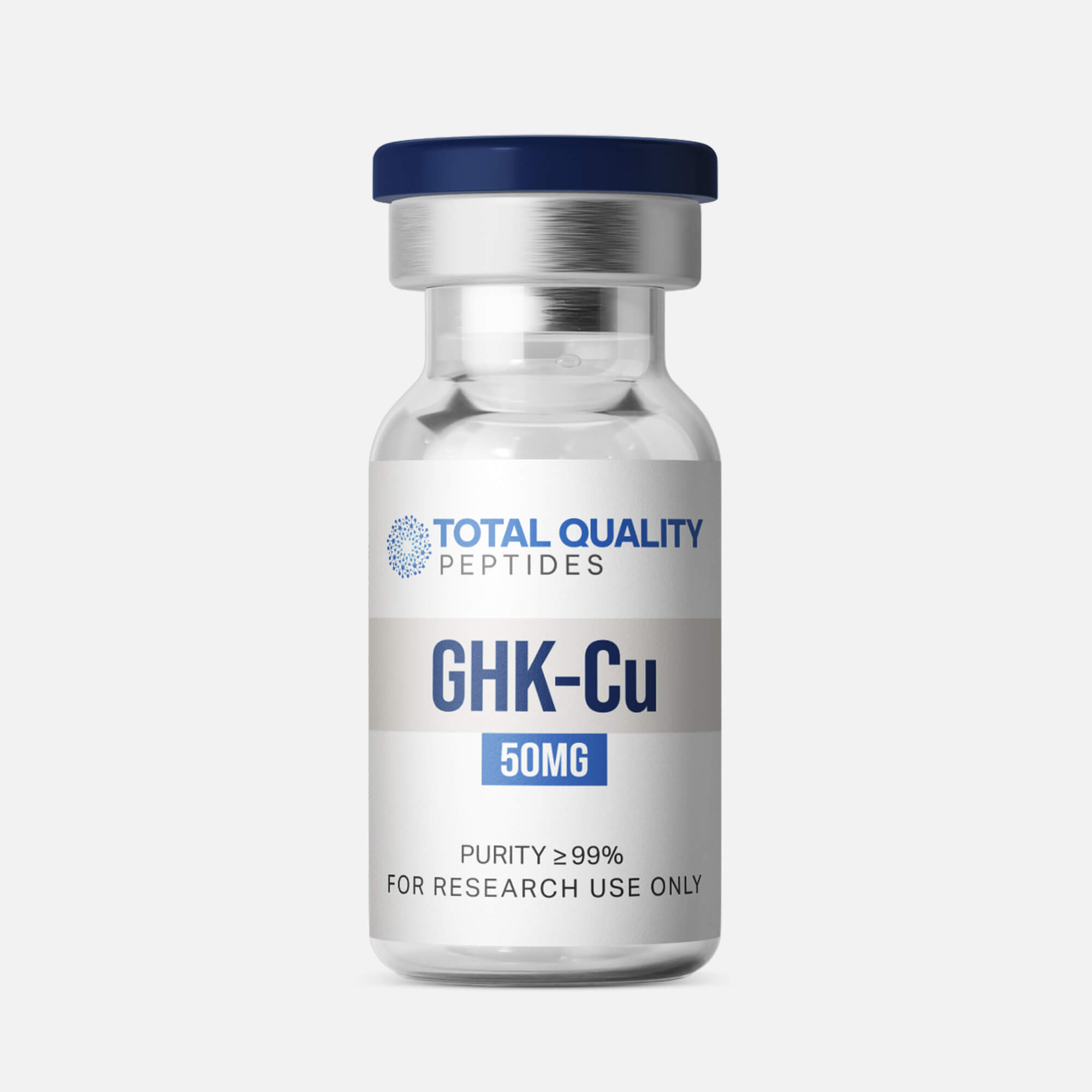
- Peptide: GHK-Cu (Glycyl-L-Histidyl-L-Lysine-Copper(II))
- Other Designations: Copper Peptide GHK-Cu, Tripeptide-Copper Complex, Glycyl-L-Histidyl-L-Lysine-Cu²⁺
- Classification: Naturally occurring copper-binding tripeptide
- Available Size: 50mg
- Form: Lyophilized (freeze-dried) powder
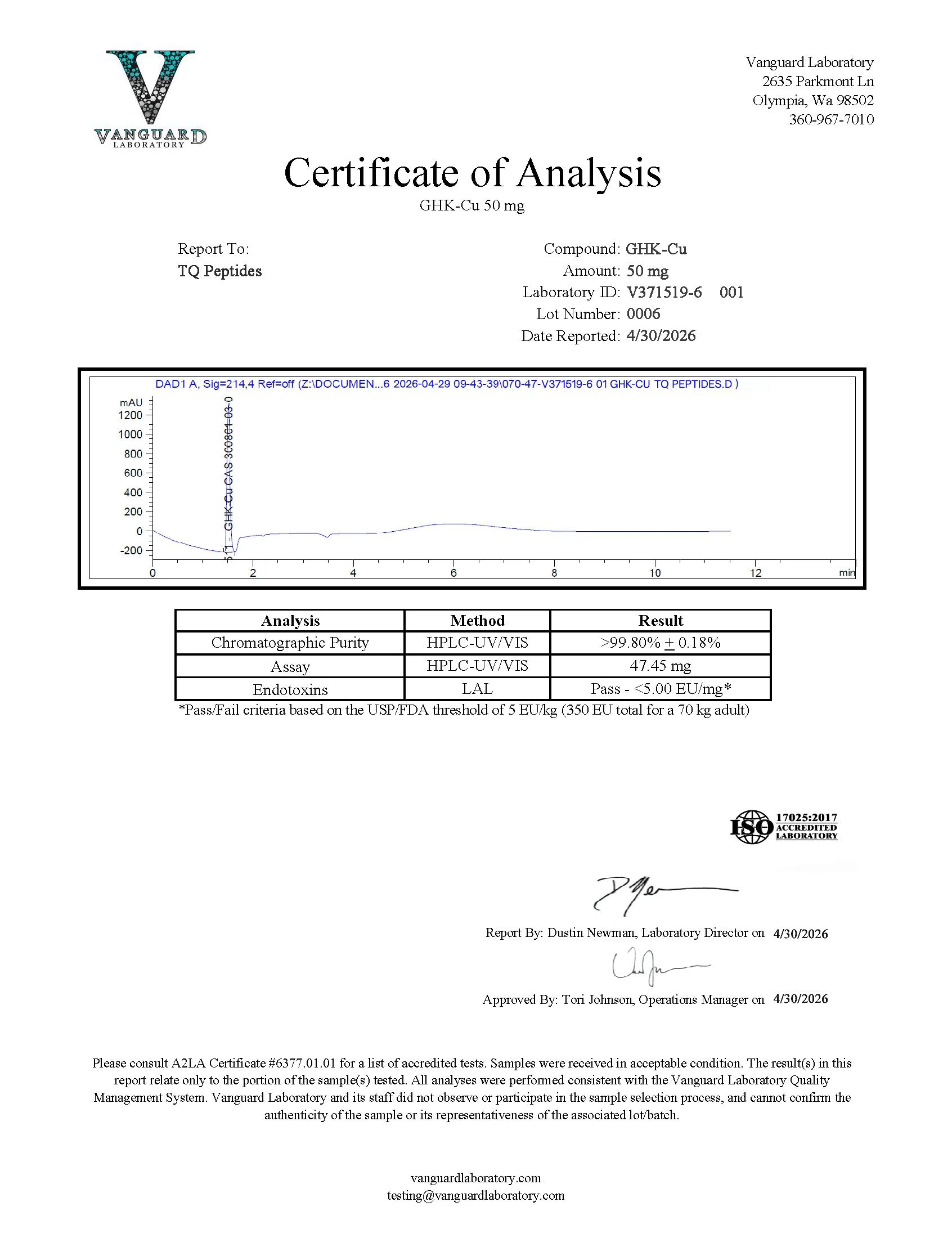
- Purity: >99%
- Amino Acid Count: 3 (Glycine-Histidine-Lysine)
- Molecular Formula: C₁₄H₂₃CuN₆O₄
- Molecular Weight: 340.38 g/mol
- Endogenous Source: Found naturally in human plasma, saliva, and urine; released at sites of tissue injury
- Age-Related Decline: Average plasma concentration drops from ~200 ng/mL at age 20 to ~80 ng/mL by age 60
- Origin: Synthetic version of the naturally occurring human tripeptide-copper complex
- Storage: Store lyophilized powder at -20°C. Once reconstituted, store at 2–8°C and use within 30 days.
- Intended Use: For laboratory and research purposes only. Not for human consumption.
- Third-party tested with Certificate of Analysis available.
What Is GHK-Cu?
GHK-Cu is one of the most unusual peptides in the research catalog — not because of what it does (although its range of studied actions is remarkably broad) but because of where it comes from. Unlike the vast majority of research peptides, which are wholly synthetic designs engineered to mimic or modulate biological processes, GHK-Cu is a naturally occurring molecule. It circulates in human plasma, appears in saliva and urine, and is actively released at sites of tissue injury as part of the body’s endogenous repair response.
The molecule itself is a tripeptide—just three amino acids: glycine, histidine, and lysine—complexed with a copper(II) ion. The copper binding is not incidental; it is the defining feature of the compound. GHK alone has biological activity. When complexed with copper, its functional profile expands dramatically. The copper ion enables GHK-Cu to participate in metalloenzyme processes and influence gene expression across hundreds of genes. It also lets GHK-Cu interact with the extracellular matrix in ways a non-metallated peptide cannot.
The age-related decline in GHK-Cu is one of the most striking aspects of the compound’s biology. At age 20, the average plasma concentration is approximately 200 ng/mL. By age 60, this drops to approximately 80 ng/mL — a 60% reduction. This decline parallels the well-documented reduction in wound healing capacity, collagen production, skin thickness, and tissue repair efficiency that characterizes biological aging. Whether this decline is a cause of age-related tissue deterioration or merely a correlate remains an active area of investigation, but the temporal association has driven significant research interest in GHK-Cu as a compound whose restoration might counteract some aspects of the aging process.
Research into GHK-Cu spans an unusually diverse set of domains: wound healing and tissue repair, collagen synthesis and extracellular matrix remodeling, gene expression and genomic resetting, antioxidant defense, anti-inflammatory signaling, anti-metastatic activity, pain modulation, anxiolytic behavior, lipid peroxidation inhibition, and skin structure restoration. No other peptide in the research catalog connects to this many distinct biological systems through a single naturally occurring three-amino-acid compound.
How GHK-Cu Works — Proposed Mechanisms of Action
GHK-Cu does not operate through a single receptor pathway, unlike most peptides. Its mechanisms are multi-modal — it acts through copper delivery, gene expression modulation, enzyme regulation, and extracellular matrix interaction simultaneously.
Copper Delivery and Metalloenzyme Activation. GHK exhibits a strong affinity for copper(II), and research suggests that one of its primary functions may be facilitating the uptake of copper into cells. When GHK-Cu was added to cell cultures at nanomolar concentrations, it induced a wide range of responses, from growth stimulation to cell differentiation. During isolation studies, the peptide was found to co-isolate with copper ions and a fraction of iron ions, and, when incubated with cells as a copper-iron complex, it showed maximal biological activity. This suggests that GHK-Cu may function, in part, as a copper transport vehicle — delivering the metal ion to intracellular sites where it can activate copper-dependent enzymes involved in collagen crosslinking (lysyl oxidase), antioxidant defense (superoxide dismutase), and other metalloenzyme-mediated processes.
Gene Expression and Genomic Resetting. Perhaps the most significant mechanistic finding in GHK-Cu research is its ability to simultaneously influence the expression of a large number of genes. Studies have suggested that GHK-Cu may reset elements of the genome — shifting gene expression patterns in damaged, diseased, or aged cells back toward healthier profiles. This genomic resetting potential has been observed in models of carcinogenic cells and COPD cells, where GHK-Cu appeared to restore impaired gene expression patterns. The scope of this gene-regulatory activity is unusually broad for a three-amino-acid peptide.
Collagen Synthesis and Matrix Remodeling. GHK-Cu has been shown to stimulate collagen synthesis by fibroblasts and to increase the accumulation of total proteins and DNA at injury sites. The proposed mechanism involves stimulating decorin protein synthesis — a proteoglycan that organizes collagen fibrils and regulates wound healing. Additionally, GHK-Cu has been shown to stimulate the production of tissue inhibitors of metalloproteinases (TIMP-1 and TIMP-2), which regulate the breakdown and remodeling of the extracellular matrix during tissue repair.
NF-κB and Nrf2 Signaling. At the molecular signaling level, GHK-Cu has been proposed to interact with two critical pathways simultaneously. It may inhibit the NF-κB signaling pathway — a master regulator of inflammatory gene expression — by altering IκBα phosphorylation, potentially leading to reduced expression of pro-inflammatory genes. Concurrently, it may boost the Nrf2 pathway — the cell’s primary defense against oxidative damage — by promoting Nrf2 nuclear translocation and the transcription of antioxidant genes. This dual anti-inflammatory/pro-antioxidant signaling profile is considered highly unusual for a naturally occurring tripeptide.
Iron Regulation and Lipid Peroxidation. GHK-Cu has been proposed to inhibit the release of iron from ferritin — the protein complex that stores iron in cells. Unregulated iron release can catalyze lipid peroxidation, a destructive process where free radicals attack membrane lipids. Research suggests that GHK may reduce iron release from ferritin by up to 87%, potentially reducing inflammation and oxidative damage in affected tissues.
Preclinical and Clinical Research Overview
GHK-Cu has been studied across a remarkably diverse range of research domains. Below is a detailed summary organized by focus area.
GHK-Cu and Wound Healing / Tissue Repair
Wound healing is the most extensively studied application of GHK-Cu, beginning with foundational research in the 1980s.
The initial observation was that GHK-Cu appeared to be released endogenously at sites of tissue injury — functioning as an “emergency response molecule” liberated from the extracellular matrix when damage occurred. Once released, GHK appeared to bind to copper ions in the blood and then stimulate decorin protein synthesis, which, in turn, promoted collagen synthesis and organized wound healing at the repair site.
In a controlled study using 18 New Zealand white rabbits divided into three groups (GHK-Cu, zinc oxide, or placebo), experimental wounds were created and treated for 21 consecutive days. The GHK-Cu group showed greater healing than both the zinc oxide and placebo controls.
A separate study compared GHK-Cu against helium-neon laser therapy at two different energy densities (1 J/cm² and 3 J/cm²) in 24 rabbits over 28 days. Rabbits receiving GHK-Cu exhibited improved wound healing characterized by decreased neutrophil counts (indicating reduced acute inflammation) and increased neovascularization (formation of new blood vessels at the wound site).
In a clinical study involving diabetic subjects with neuropathic ulcers, a GHK-Cu gel complex was compared against standard wound care with a placebo. The GHK-Cu gel group achieved closure of 98.5% of plantar ulcers compared to 60.8% in the control group — a statistically and clinically significant difference that demonstrated the compound’s potential in one of the most challenging wound-healing contexts in medicine.
GHK-Cu and Collagen / Extracellular Matrix
Beyond acute wound healing, GHK-Cu has been investigated for its broader effects on the extracellular matrix — the structural scaffold that supports tissues throughout the body.
Research shows that GHK-Cu stimulates collagen synthesis in fibroblasts and increases total protein and DNA levels at tissue sites. It also induces TIMP-1 and TIMP-2, which help balance matrix degradation and construction. By promoting synthesis and regulating breakdown, GHK-Cu supports constructive remodeling.
These matrix-remodeling effects have been specifically studied in the context of skin aging. Research has suggested that GHK-Cu may tighten and reverse the thinning of aging skin structure, restore the skin barrier, and moderate texture irregularities, hyperpigmentation, and lesions. The age-related decline in endogenous GHK-Cu levels (from ~200 ng/mL to ~80 ng/mL between ages 20 and 60) has been proposed as a contributing factor to the progressive thinning, loosening, and impaired repair capacity of aging skin.
GHK-Cu and Gene Expression
One of the most far-reaching findings in GHK-Cu research is the peptide’s apparent ability to influence the expression of a large number of genes simultaneously — a property described by researchers as “resetting the human genome to health.”
Studies have demonstrated that GHK-Cu may modulate gene expression, shifting the expression profiles of damaged or diseased cells toward healthier ones. This has been observed in carcinogenic cell models and COPD cell models, where GHK-Cu appeared to restore impaired gene expression patterns. The breadth of genes affected — spanning tissue repair, antioxidant defense, anti-inflammatory response, and cellular survival — suggests that GHK-Cu operates at a high level of biological regulation rather than through a single downstream pathway.
This gene-resetting capacity is particularly notable because GHK-Cu is a three-amino-acid peptide rather than a large protein or transcription factor. The mechanism through which such a small molecule influences the expression of so many genes remains an active area of investigation.
GHK-Cu and Anti-Metastatic / Cancer Cell Research
GHK-Cu has been investigated for its potential interactions with cancer cell biology in several contexts.
In a foundational 1983 study, a mixture of GHK-Cu complex and ascorbic acid (Vitamin C) was presented to 180 mice bearing sarcoma tumors. Researchers reported that the mixture appeared to reduce the growth of carcinogenic cells. Subsequent analysis revealed that GHK-Cu increased the expression of caspase- and DNA repair-associated genes.
More specifically, the peptide appeared to suppress the growth of two cancer cell types in experimental settings: SH-SY5Y neuroblastoma cells (a model for studying nerve cell behavior and pathology) and U937 histiocytic lymphoma cells (used to study immune system responses to cancer). Additionally, GHK-Cu appeared to reactivate the apoptosis pathway — the programmed cell death mechanism crucial for eliminating faulty cells — as evidenced by activity in caspases 3 and 7, enzymes that play central roles in the apoptotic cascade.
A particularly notable observation was that while GHK-Cu appeared to suppress the growth of cancerous cells, it simultaneously promoted the growth of non-cancerous NIH-3T3 fibroblasts — healthy cells commonly used as a standard model for studying normal cell division. This differential response — inhibiting cancerous cells while supporting healthy ones — has generated significant research interest.
GHK-Cu and Antioxidant Activity
Research has characterized GHK-Cu as a potential endogenous antioxidant with selective activity against specific reactive oxygen species (ROS).
Using flow cytometry and electron spin resonance (ESR) spin-trapping techniques, investigators assessed GHK’s ability to neutralize different types of free radicals. The peptide appeared to lower ROS levels induced by tert-butyl hydroperoxide (t-BOPD), a chemical that promotes intracellular oxidative stress.
The ESR data revealed an important selectivity pattern: GHK was notably effective at reducing hydroxyl (·OH) and peroxyl (ROO·) radical concentrations but had a more modest effect on superoxide (O₂⁻·) radicals. When compared against established antioxidants, including carnosine and reduced glutathione (GSH), preliminary results suggested that GHK may be more proficient at neutralizing hydroxyl radicals than either of these well-known antioxidant compounds.
This selective antioxidant profile — strong against hydroxyl and peroxyl radicals, moderate against superoxide — positions GHK-Cu as a compound that targets the most damaging ROS species rather than functioning as a broad-spectrum, non-selective scavenger.
GHK-Cu and Anti-Inflammatory Action
Research has investigated the mechanisms through which GHK-Cu may exert anti-inflammatory effects, with particular focus on cigarette smoke-induced pulmonary inflammation.
In mouse models exposed to cigarette smoke, GHK-Cu presentation was associated with decreased production of pro-inflammatory cytokines — specifically interleukin-1β (IL-1β) and tumor necrosis factor-α (TNF-α) — in bronchoalveolar lavage fluid. A potential reduction in myeloperoxidase (MPO) activity was also observed, suggesting reduced neutrophil-driven inflammation and oxidative stress in lung tissues.
At the molecular signaling level, the anti-inflammatory action appears to operate through two simultaneous pathways. First, GHK-Cu may inhibit NF-κB activation by altering IκBα phosphorylation, potentially reducing the expression of NF-κB-regulated pro-inflammatory genes. Second, GHK-Cu may boost the Nrf2 pathway by promoting Nrf2 nuclear translocation, enhancing the transcription of genes that combat oxidative stress, and bolstering cellular resilience against oxidative damage.
Supporting this dual-pathway mechanism, GHK-Cu administration was associated with reduced levels of malondialdehyde (MDA, a marker of lipid peroxidation and oxidative stress) and restored glutathione (GSH, a critical cellular antioxidant) levels — suggesting amelioration of the oxidative stress component of the inflammatory response.
GHK-Cu and Behavioral Research
An unexpected area of GHK-Cu investigation examines the peptide’s potential effects on pain perception, anxiety, and aggression in animal models.
In pain studies, mice placed on a moderately heated plate were observed to lick their paws more quickly (indicating reduced pain perception) following GHK-Cu delivery compared to controls — suggesting the peptide may exhibit pain-modulating properties.
In anxiety research, male rats placed in an elevated plus maze (a standard anxiety assessment apparatus) spent more time in the “open arms” configuration after GHK-Cu delivery — a behavioral indicator of reduced anxiety — compared to untreated controls.
In aggression studies, paired rats receiving minor electric shocks (a protocol that reliably induces aggressive behavior) exhibited a five-fold reduction in the number of attacks following GHK-Cu delivery compared to untreated pairs — suggesting a potential calming or anti-aggressive effect.
These behavioral findings — pain reduction, anxiolysis, and aggression suppression — are not typically associated with wound-healing or tissue-repair peptides, and they expand GHK-Cu’s research profile into the neurobehavioral domain.
GHK-Cu and Iron / Lipid Peroxidation
A theoretical model proposes that GHK-Cu may play a role in controlling iron-mediated tissue damage.
Ferritin is the protein complex that stores intracellular iron. When iron is released from ferritin in an uncontrolled manner, it can catalyze lipid peroxidation—a destructive chain reaction in which free radicals attack lipid membranes, causing cellular damage and inflammation. Research has suggested that GHK may inhibit the assembly of iron complexes within injured tissues and may restrict the release of iron from ferritin by up to 87%.
If confirmed, this degree of iron-release inhibition could significantly reduce both inflammation and oxidative stress at sites of tissue injury — adding another mechanism to GHK-Cu’s already extensive repertoire of tissue-protective actions.
Summary of Key Research Findings
- Endogenous Origin — Naturally occurring in human plasma, saliva, and urine; released at sites of tissue injury as part of the body’s repair response
- Age-Related Decline — Plasma concentration drops ~60% between ages 20 and 60 (from ~200 ng/mL to ~80 ng/mL)
- Wound Healing — 98.5% plantar ulcer closure in diabetic subjects (vs 60.8% control); superior to zinc oxide and comparable to helium-neon laser in animal models
- Collagen Synthesis — Stimulates fibroblast collagen production, decorin synthesis, and TIMP-1/TIMP-2 expression for balanced extracellular matrix remodeling
- Gene Expression — Broad genomic resetting capacity; shifts gene expression patterns in damaged/diseased cells toward healthier profiles
- Anti-Metastatic — Suppressed growth of neuroblastoma and lymphoma cells while promoting healthy fibroblast growth; reactivated caspase-mediated apoptosis
- Antioxidant — Selectively neutralizes hydroxyl and peroxyl radicals; potentially more effective than carnosine or glutathione against hydroxyl radicals
- Anti-Inflammatory — Reduced pro-inflammatory cytokines (IL-1β, TNF-α); inhibited NF-κB; activated Nrf2; restored glutathione levels
- Iron Regulation — May restrict iron release from ferritin by up to 87%, reducing lipid peroxidation and inflammation.
- Behavioral — Pain reduction, anxiolytic effects, and a 5-fold reduction in aggression in animal models
Handling and Reconstitution
- Store lyophilized powder at -20°C for long-term stability.
- Reconstitute with bacteriostatic water or sterile water for injection.
- Once reconstituted, store at 2–8°C (refrigerator temperature)
- Use the reconstituted solution within 30 days.
- Avoid repeated freeze-thaw cycles.
- GHK-Cu is a metallopeptide — the copper(II) ion is integral to its biological activity and should not be chelated or removed.
- Handle with appropriate laboratory safety protocols.
Quality Assurance
- Purity verified at >99% by high-performance liquid chromatography (HPLC)
- Certificate of Analysis (COA) available for every batch
- Third-party tested for purity, identity, and consistency.
- Supplied as lyophilized (freeze-dried) powder for maximum stability
Frequently Asked Questions
What is GHK-Cu?
GHK-Cu (Glycyl-L-Histidyl-L-Lysine-Copper(II)) is a naturally occurring tripeptide — three amino acids complexed with a copper(II) ion — found in human plasma, saliva, and urine. It is released endogenously at sites of tissue injury and has been studied across wound healing, collagen synthesis, gene expression, antioxidant defense, anti-inflammatory signaling, anti-metastatic activity, pain modulation, and skin remodeling.
What makes GHK-Cu different from other peptides?
Two things. First, it’s naturally occurring — not a synthetic design. It exists in your bloodstream right now. Second, the copper(II) ion is integral to its function, making it a metallopeptide rather than a standard peptide. The copper enables interactions with metalloenzymes and gene expression pathways that non-metallated peptides cannot access.
Why does GHK-Cu decline with age?
The mechanism behind the age-related decline is not fully characterized, but the correlation is well-documented: average plasma concentration drops from approximately 200 ng/mL at age 20 to approximately 80 ng/mL by age 60 — a 60% reduction that parallels the decline in wound healing, collagen production, and skin integrity associated with aging.
What is the gene-resetting capacity of GHK-Cu?
Studies have demonstrated that GHK-Cu can modulate the expression of many genes simultaneously, shifting the gene expression patterns of damaged or diseased cells back toward healthier profiles. This has been observed in carcinogenic and COPD cell models.
How effective was GHK-Cu in wound healing studies?
In a clinical study of diabetic neuropathic ulcers, GHK-Cu gel achieved 98.5% plantar ulcer closure compared to 60.8% in controls. In animal models, it outperformed zinc oxide and was comparable to helium-neon laser therapy.
Does GHK-Cu affect cancer cells?
Research has shown that GHK-Cu appeared to suppress the growth of neuroblastoma and lymphoma cells while simultaneously promoting the growth of healthy fibroblasts — suggesting a differential response based on cell health status. It also appeared to reactivate caspase-mediated apoptosis in cancer cell models.
What is the antioxidant profile of GHK-Cu?
GHK-Cu selectively targets hydroxyl and peroxyl radicals while having modest effects on superoxide radicals. Preliminary comparisons suggest it may be more effective than carnosine or glutathione at neutralizing hydroxyl radicals.
What is the purity of this product?
Greater than 99%, verified by third-party HPLC. A Certificate of Analysis is available for every batch.
What size is available?
50mg.
How should I store this product?
Store lyophilized powder at -20°C. Once reconstituted, store at 2–8°C and use within 30 days. Avoid repeated freeze-thaw cycles.
What is this product intended for?
This product is intended for laboratory and research purposes only. It is not intended for human consumption, therapeutic use, or diagnostic purposes.
References
- Pickart, L., & Margolina, A. (2018). Regenerative and Protective Actions of the GHK-Cu Peptide in the Light of the New Gene Data. International Journal of Molecular Sciences, 19(7), 1987. https://doi.org/10.3390/ijms19071987
- Pickart, L., Freedman, J. H., Loker, W. J., Peisach, J., Perkins, C. M., Stenkamp, R. E., & Weinstein, B. (1980). Growth-modulating plasma tripeptide may function by facilitating copper uptake into cells. Nature, 288(5792), 715–717. https://doi.org/10.1038/288715a0
- Pickart, L., Vasquez-Soltero, J. M., & Margolina, A. (2014). GHK and DNA: resetting the human genome to health. BioMed Research International, 2014, 151479. https://doi.org/10.1155/2014/151479
- Maquart, F. X., Pickart, L., Laurent, M., Gillery, P., Monboisse, J. C., & Borel, J. P. (1988). Stimulation of collagen synthesis in fibroblast cultures by the tripeptide-copper complex glycyl-L-histidyl-L-lysine-Cu2+. FEBS Letters, 238(2), 343–346. https://doi.org/10.1016/0014-5793(88)80509-x
- Siméon, A., Emonard, H., Hornebeck, W., & Maquart, F. X. (2000). The tripeptide-copper complex glycyl-L-histidyl-L-lysine-Cu2+ stimulates matrix metalloproteinase-2 expression by fibroblast cultures. Life Sciences, 67(18), 2257–2265. https://doi.org/10.1016/s0024-3205(00)00803-1
- Cangul, I. T., Gul, N. Y., Topal, A., & Yilmaz, R. (2006). Evaluation of the effects of tripeptide-copper complex and zinc oxide on open-wound healing in rabbits. Veterinary Dermatology, 17(6), 417–423. https://doi.org/10.1111/j.1365-3164.2006.00551.x
- Gul, N. Y., Topal, A., Cangul, I. T., & Yanik, K. (2008). The effects of tripeptide copper complex and helium-neon laser on wound healing in rabbits. Veterinary Dermatology, 19(1), 7–14. https://doi.org/10.1111/j.1365-3164.2007.00647.x
- Mulder, G. D., Patt, L. M., Sanders, L., Rosenstock, J., Altman, M. I., Hanley, M. E., & Duncan, G. W. (1994). Enhanced healing of ulcers in patients with diabetes by treatment with glycyl-l-histidyl-l-lysine copper. Wound Repair and Regeneration, 2(4), 259–269. https://doi.org/10.1046/j.1524-475X.1994.20406.x
- Bobyntsev, I. I., Chernysheva, O. I., Dolgintsev, M. E., Smakhtin, M. Y., & Belykh, A. E. (2015). Anxiolytic effects of Gly-His-Lys peptide and its analogs. Bulletin of Experimental Biology and Medicine, 158(6), 726–728. https://doi.org/10.1007/s10517-015-2847-3
- Sever’yanova, L. A., & Dolgintsev, M. E. (2017). Effects of Tripeptide Gly-His-Lys in Pain-Induced Aggressive-Defensive Behavior in Rats. Bulletin of Experimental Biology and Medicine, 164(2), 140–143. https://doi.org/10.1007/s10517-017-3943-3
- Sakuma, S., Ishimura, M., Yuba, Y., Itoh, Y., & Fujimoto, Y. (2018). The peptide glycyl-ʟ-histidyl-ʟ-lysine is an endogenous antioxidant in living organisms, possibly by diminishing hydroxyl and peroxyl radicals. International Journal of Physiology, Pathophysiology and Pharmacology, 10(3), 132–138.
- Zhang, Q., Yan, L., Lu, J., & Zhou, X. (2022). Glycyl-L-histidyl-L-lysine-Cu2+ attenuates cigarette smoke-induced pulmonary emphysema and inflammation by reducing the oxidative stress pathway. Frontiers in Molecular Biosciences, 9, 925700. https://doi.org/10.3389/fmolb.2022.925700
- Miller, D. M., DeSilva, D., Pickart, L., & Aust, S. D. (1990). Effects of glycyl-histidyl-lysyl chelated Cu(II) on ferritin-dependent lipid peroxidation. Advances in Experimental Medicine and Biology, 264, 79–84. https://doi.org/10.1007/978-1-4684-5730-8_11
Disclaimer
This product is sold for research and laboratory use only. It is not a drug, food, cosmetic, or supplement. It is not intended to diagnose, treat, cure, or prevent any disease or medical condition. It is not approved for human or veterinary use. The information provided on this page is drawn from published preclinical and clinical research literature and is presented for informational purposes only. Researchers are responsible for ensuring compliance with all applicable regulations governing the purchase, handling, and use of research peptides in their jurisdiction.
All products sold by TQ Peptides are intended strictly for laboratory research, analytical testing, and in vitro experimental purposes only. These products are not intended for human or animal consumption.
TQ Peptides operates solely as a research chemical supplier and is not a compounding pharmacy or chemical compounding facility as defined under Section 503A of the Federal Food, Drug, and Cosmetic Act. Additionally, TQ Peptides is not classified as an outsourcing facility under Section 503B of the same Act.
The statements made on this website have not been evaluated by the U.S. Food and Drug Administration (FDA). Products sold by TQ Peptides are not intended to diagnose, treat, cure, or prevent any disease.