Product Specifications
- Compound: NAD+ (Nicotinamide Adenine Dinucleotide)
- Other Designations: NAD⁺, Coenzyme I, Diphosphopyridine Nucleotide (DPN)
- Classification: Endogenous dinucleotide coenzyme
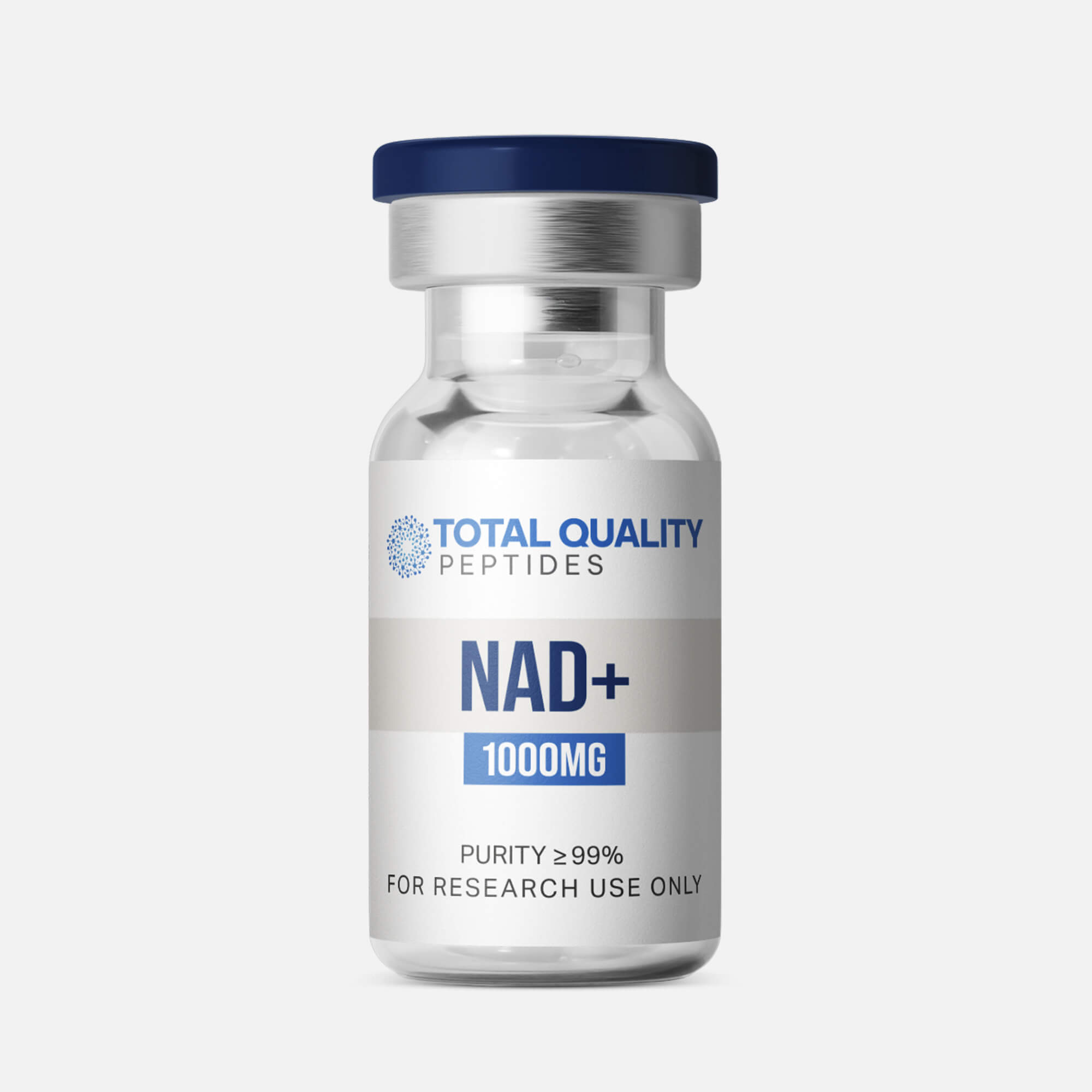
- Available Size: 1000mg
- Form: Lyophilized (freeze-dried) powder
- Purity: >99%
- Molecular Formula: C₂₁H₂₇N₇O₁₄P₂
- Molecular Weight: 663.43 g/mol
- Endogenous Synthesis: The body naturally makes NAD+ from tryptophan or from recycled forms like nicotinamide, nicotinic acid, nicotinamide riboside (NR), and nicotinamide mononucleotide (NMN).
- Enzymatic Role: NAD+ participates in over 500 cellular reactions.
- Main Enzyme Partners: Sirtuins, PARPs, and cADPRS depend on NAD+ to maintain cell health.
- Age-Related Decline: NAD+ concentrations steadily decrease in many tissues as we age.
- Storage: Store freeze-dried powder at -20°C. Once mixed, keep at 2–8°C and use soon. Protect from light.
- Intended Use: For laboratory and research purposes only. Not for human consumption.
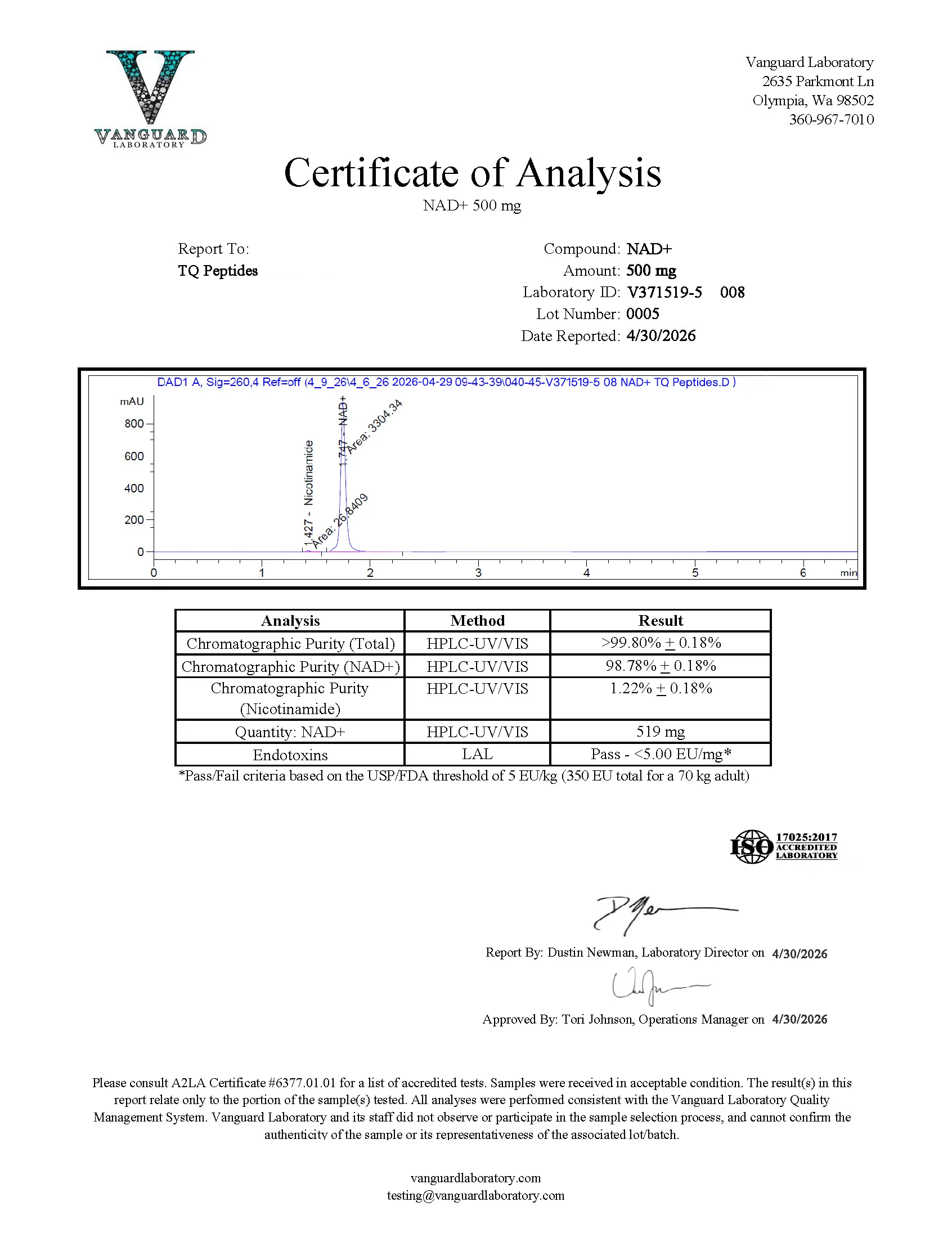
- Third-party tested with Certificate of Analysis available.
What Is NAD+?
NAD+ is an essential coenzyme found in every cell, fueling energy production, DNA repair, gene expression, calcium signaling, immunity, mitochondrial function, and stress response. By sustaining NAD+ levels, you supercharge and defend every aspect of cellular health.
NAD+ and NADH alternate during cellular respiration. NAD+ captures electrons from glucose to form NADH, which then drives ATP synthesis and sustains energy production.
NAD+ is also a vital substrate for three enzyme groups that control key cell processes:
Sirtuins use NAD+ for mitochondrial health, stem cell maintenance, inflammation control, and gene expression. Their activity is linked to NAD+ levels and aging.
PARPs use NAD+ to help repair DNA. This process consumes NAD+, creating competition for repair resources.
cADPRS enzymes, such as CD38 and CD157, use NAD+ for calcium signaling, immunity, and DNA repair. CD38 rises with age, contributing to NAD+ decline.
All three enzyme groups require NAD+. As NAD+ diminishes, cells must prioritize vital functions—potentially sacrificing longevity, repair, or immunity. Restoring NAD+ can rejuvenate key cellular processes, fueling increased research interest.
The 1000mg size supports research that requires significant NAD+, enabling extended studies, high-concentration formulations, or multiple administrations. Expand your research capacity with this robust option.
NAD+ Synthesis — How the Body Makes It
To provide better context, it helps to understand how the body produces NAD+ and the implications of its naturally declining levels with age. This understanding clarifies why research is increasingly focused on developing supplementation strategies.
The body synthesizes NAD+ through multiple pathways:
De novo synthesis: The body makes NAD+ from tryptophan in several steps, its main source from scratch.
Salvage pathways recycle tryptophan, nicotinamide, nicotinic acid, NR, and NMN. NR and NMN are key intermediates for boosting NAD+.
NAD+ declines with age, driven by elevated consumption (CD38, PARPs) and reduced synthesis. This reduction puts immense stress on all NAD+-dependent enzymes, rapidly accelerating metabolic aging. Taking decisive steps to restore NAD+ is a powerful, proactive strategy to foster healthier aging.
Preclinical and Clinical Research Overview
NAD+ has been widely studied due to its essential role as a coenzyme that powers energy production, repair, and regulation. The summary below is organized by research focus.
NAD+ and Productive Aging
The connection between NAD+ and aging is the most extensively studied aspect of the compound’s biology.
A study gave aging mice NMN for 12 months. NMN increased NAD+ levels, which were associated with reduced weight gain, increased energy, improved lipid profiles, and enhanced function. Restoring NAD+ appeared to reduce aging markers by reviving enzyme activity.
Low NAD+ affects countless tissues, but restoring it delivers widespread benefits by fueling over 1,000 crucial processes throughout the body. Tap into the transformative advantages that only optimal NAD+ can deliver.
NAD+ and Neurodegeneration / Mitochondrial Function
Mitochondrial dysfunction contributes to neurodegeneration. NAD+ is essential for mitochondrial energy production, prompting researchers to investigate whether raising NAD+ levels can restore mitochondrial function in nerve tissue.
One study gave aged mice NMN for up to 12 months. Researchers observed increased mitochondrial oxygen consumption in brain cells, suggesting NMN elevated NAD+ production and improved mitochondrial function.
These results suggest that age-related mitochondrial dysfunction in nerve cells is partially reversible upon restoration of NAD+. Mitochondria operate more efficiently when NAD+ is present.
NAD+ and DNA Repair
NAD+ plays a direct, critical role in DNA repair by serving as a substrate for PARP enzymes.
When DNA is damaged, PARPs use NAD+ to add ADP-ribose units to proteins, marking the site for repair.
In one study, NAD+ was depleted before or after oxygen deprivation in rat neuronal cultures. After 72 hours, DNA repair, cell viability, and oxidative stress repair improved.
This demonstrates that NAD+ replenishment is essential for repair—before or after damage—thereby unlocking valuable intervention opportunities and enabling better cellular recovery.
Severe DNA damage can rapidly deplete PARPs’ NAD+. This may affect sirtuins and mitochondria. NAD+ is reduced when it is most needed, which can lead to cell death.
NAD+ and Liver / Kidney Protection
NAD+ research extends to hepatic and renal tissues, where the compound’s role in sirtuin activation and metabolic regulation has yielded notable findings.
Mice supplemented with NAD+ showed improved liver outcomes: less obesity, better glucose regulation, and enhanced liver function. This result aligns with the actions of sirtuins such as SIRT1 and SIRT3, which mediate metabolic and inflammatory processes.
In aged mouse kidney cells, NAD+ supplementation appeared to promote sirtuin activity and protect against glucose-induced hypertrophy. This finding is relevant to research on diabetic nephropathy. When mice received NMN, the compound also appeared to offer protection against cisplatin-induced kidney injury, adding a tissue-protective effect to NAD+’s metabolic role.
NAD+ and Skeletal Muscle / Energy Production
NAD+’s most defined biological role is cellular energy production. Skeletal muscle, with its high energy requirements, is especially sensitive to NAD+ availability.
When aged mice were given NMN daily for 7 days, researchers reported increased ATP production, reduced inflammation, and elevated mitochondrial function in skeletal muscle. The mechanism traces directly through NAD+’s role in cellular respiration:
During glycolysis, the initial breakdown of glucose into pyruvate generates a small amount of ATP and converts NAD+ into NADH by accepting electrons and hydrogen ions from glucose.
During the citric acid cycle (Krebs cycle), pyruvate is further broken down in the mitochondria, generating additional NADH through multiple reactions where NAD+ accepts electrons.
In the electron transport chain, NADH donates electrons, generating an electrochemical gradient that drives protons across the mitochondrial membrane. This gradient powers ATP synthase to produce ATP. As NADH releases electrons, it becomes NAD+ and cycles back through glycolysis and the Krebs cycle.
Continuous NAD+/NADH cycling is critical for converting nutrients to energy. Declining NAD+ disrupts this cycle—lowering ATP production, increasing muscle fatigue, and depleting cellular vitality. Replenishing NAD+ restores energy and rejuvenates muscle and cell performance.
NAD+ and Cardiac Protection
Cardiac tissue has high energy demands. NAD+ deficiency has been linked to reduced sirtuin activity, lower energy production, and increased risk of ischemic damage.
When mice received NMN 30 minutes before ischemia, the NAD+ intermediate reportedly protected against injury. This suggests that adequate NAD+ levels can buffer cardiac tissue against damage from oxygen deprivation, possibly by supporting mitochondrial energy production and DNA repair during acute stress.
The timing—30 minutes pre-ischemia—is notable. It suggests a narrow protective window and that NAD+ must be available at the time of the insult to support the immediate stress response, not just afterward.
NAD+ and the Competition Model — Why Balance Matters
A key finding is that sirtuins, PARPs, and cADPRS compete for the body’s limited NAD+. When NAD+ is low, these enzyme groups cannot all work fully. This competition shapes vital cell functions and drives interest in restoring NAD+.
Sirtuins use NAD+ to regulate mitochondrial function, gene expression, and inflammation. PARPs need it for DNA repair. cADPRS enzymes (notably CD38) require NAD+ for calcium signaling and immune function. All three share the same NAD+ pool, so when the supply is low, their activities directly compete, impacting cellular balance.
When NAD+ levels are abundant, all three systems can operate at or near capacity. When NAD+ levels are depleted — as occurs with aging, metabolic stress, DNA damage, or chronic inflammation — the cell is forced into metabolic triage. Supporting PARP-mediated DNA repair may come at the expense of sirtuin-mediated mitochondrial maintenance. Supporting CD38-mediated immune signaling may deplete the NAD+ needed for both.
This competition model is why researchers frame NAD+ restoration not as a single-target intervention but as a systemic metabolic reset — replenishing the substrate allows every dependent process to function rather than forcing the cell to choose which critical functions to underfund. The breadth of NAD+’s involvement in over 500 enzymatic reactions means that its depletion can cause cascading failures across multiple systems, and its restoration can create cascading benefits across those same systems.
Summary of Key Research Findings
- Enzymatic Scope — Participates in over 500 enzymatic reactions across energy metabolism, DNA repair, gene expression, immune signaling, and mitochondrial function.
- Three Enzyme Partners — Essential substrate for Sirtuins (longevity/mitochondrial), PARPs (DNA repair), and cADPRS (immune/calcium signaling)
- Productive Aging — 12-month NMN supplementation in aged mice produced reduced weight gain, increased energy metabolism, enhanced physical activity, and improved lipid profiles
- Neurodegeneration — Restored mitochondrial oxygen consumption rates in aged neural tissue after 3–12 months of NMN supplementation
- DNA Repair — Direct NAD+ replenishment improved DNA base excision repair, cell viability, and oxidative DNA damage repair in ischemic neuronal cultures — effective both pre- and post-insult
- Liver Protection — Prevented obesity and alcoholic hepatitis; improved glucose homeostasis and liver function in experimental models
- Kidney Protection — Protected against glucose-induced hypertrophy and cisplatin-induced kidney injury via sirtuin activation
- Skeletal Muscle — Increased ATP production, reduced inflammation, and elevated mitochondrial function after 7 days of NMN supplementation
- Cardiac Protection — NMN delivered 30 minutes pre-ischemia produced cardioprotective effects against ischemic injury
- Age-Related Decline — NAD+ levels decline progressively with age across multiple tissues, driven by increased consumption (CD38, PARPs) and decreased synthesis efficiency
Handling and Reconstitution
- Store lyophilized powder at -20°C for long-term stability.
- Reconstitute with sterile water or an appropriate buffer for your experimental system.
- Once reconstituted, store at 2–8°C and use promptly.
- Protect from light — NAD+ is light-sensitive and may degrade under prolonged UV or fluorescent exposure.
- Avoid repeated freeze-thaw cycles.
- NAD+ is hygroscopic — handle in a low-humidity environment and reseal promptly after opening
- Handle with appropriate laboratory safety protocols.
Quality Assurance
- Purity verified at >99% by high-performance liquid chromatography (HPLC)
- Identity confirmed by mass spectrometry (MS)
- Certificate of Analysis (COA) available for every batch
- Third-party tested for purity, identity, and consistency.
- Supplied as lyophilized (freeze-dried) powder for maximum stability
Frequently Asked Questions
What is NAD+?
Nicotinamide Adenine Dinucleotide (NAD+) is an endogenous dinucleotide coenzyme present in every living cell. It participates in over 500 enzymatic reactions, including energy metabolism (glycolysis, Krebs cycle, electron transport chain), DNA repair (via PARPs), gene expression and mitochondrial regulation (via Sirtuins), and immune signaling (via cADPR enzymes). It is essential for converting nutrients into cellular energy through the NAD+/NADH redox cycle.
Is NAD+ a peptide?
No. NAD+ is a dinucleotide coenzyme, not a peptide. It is composed of two nucleotides joined by their phosphate groups. It is included in the research catalog alongside peptides because it is a critical compound in cellular metabolism and longevity research.
Why do NAD+ levels decline with age?
Through a combination of increased consumption and decreased synthesis efficiency. The enzyme CD38 — a major NAD+ consumer — is upregulated with age, while PARP activity increases in response to accumulated DNA damage. Simultaneously, the efficiency of NAD+ synthesis pathways may decline. The net result is a progressive reduction in the cellular NAD+ pool across multiple tissues.
What is the competition model?
Sirtuins, PARPs, and cADPRS all require NAD+ as a substrate and compete for the same pool. When NAD+ is abundant, all three function well. When NAD+ is depleted, the cell must prioritize — supporting DNA repair may reduce sirtuin activity, and vice versa. Restoring NAD+ levels allows all three systems to function simultaneously.
What are NR and NMN?
Nicotinamide Riboside (NR) and Nicotinamide Mononucleotide (NMN) are NAD+ precursors — intermediates in the salvage pathway that the body uses to synthesize NAD+. Much of the preclinical NAD+ research has used NMN supplementation to boost NAD+ levels.
What areas of research has NAD+ been studied in?
Aging and longevity, neurodegeneration and mitochondrial function, DNA repair and ischemic neuroprotection, liver and kidney protection, skeletal muscle energy production, and cardiac ischemic protection.
What is the purity of this product?
Greater than 99%, verified by third-party HPLC and mass spectrometry. A Certificate of Analysis is available for every batch.
What size is available?
1000 mg.
How should I store this product?
Store lyophilized powder at -20°C. Protect from light. Once reconstituted, store at 2–8°C and use promptly. Avoid repeated freeze-thaw cycles. NAD+ is hygroscopic — handle in a low-humidity environment.
What is this product intended for?
This product is intended for laboratory and research purposes only. It is not intended for human consumption, therapeutic use, or diagnostic purposes.
References
- Schultz, M. B., & Sinclair, D. A. (2016). Why NAD(+) Declines during Aging: It’s Destroyed. Cell Metabolism, 23(6), 965–966. https://doi.org/10.1016/j.cmet.2016.05.022
- Braidy, N., & Liu, Y. (2020). NAD+ therapy in age-related degenerative disorders: A benefit/risk analysis. Experimental Gerontology, 132, 110831. https://doi.org/10.1016/j.exger.2020.110831
- Johnson, S., & Imai, S. (2018). NAD+ biosynthesis, aging, and disease. F1000Research, 7, 132. https://doi.org/10.12688/f1000research.12120.1
- Fang, E. F., Lautrup, S., Hou, Y., Demarest, T. G., Croteau, D. L., Mattson, M. P., & Bohr, V. A. (2017). NAD+ in Aging: Molecular Mechanisms and Translational Implications. Trends in Molecular Medicine, 23(10), 899–916. https://doi.org/10.1016/j.molmed.2017.08.001
- Mills, K. F., et al. (2016). Long-Term Administration of Nicotinamide Mononucleotide Mitigates Age-Associated Physiological Decline in Mice. Cell Metabolism, 24(6), 795–806. https://doi.org/10.1016/j.cmet.2016.09.013
- Long, A. N., et al. (2015). Effect of nicotinamide mononucleotide on brain mitochondrial respiratory deficits in an Alzheimer’s disease-relevant murine model. BMC Neurology, 15, 19. https://doi.org/10.1186/s12883-015-0272-x
- Wang, S., et al. (2008). Cellular NAD replenishment confers marked neuroprotection against ischemic cell death: role of enhanced DNA repair. Stroke, 39(9), 2587–2595. https://doi.org/10.1161/STROKEAHA.107.509158
- Rajman, L., Chwalek, K., & Bhatt, D. (2018). Therapeutic Potential of NAD-Boosting Molecules: The In Vivo Evidence. Cell Metabolism, 27(3), 529–547. https://doi.org/10.1016/j.cmet.2018.02.011
- Mehmel, M., et al. (2020). Nicotinamide Riboside — The Current State of Research and Therapeutic Uses. Nutrients, 12(6), 1616. https://doi.org/10.3390/nu12061616
- Leung, A., Todorova, T., Ando, Y., & Chang, P. (2012). Poly(ADP-ribose) regulates post-transcriptional gene regulation in the cytoplasm. RNA Biology, 9(5), 542–548. https://doi.org/10.4161/rna.19899
- Croteau, D. L., Fang, E. F., Nilsen, H., & Bohr, V. A. (2017). NAD+ in DNA repair and mitochondrial maintenance. Cell Cycle, 16(6), 491–492. https://doi.org/10.1080/15384101.2017.1285631
Disclaimer
This product is sold for research and laboratory use only. It is not a drug, food, cosmetic, or supplement. It is not intended to diagnose, treat, cure, or prevent any disease or medical condition. It is not approved for human or veterinary use. The information provided on this page is drawn from published preclinical and clinical research literature and is presented for informational purposes only. Researchers are responsible for ensuring compliance with all applicable regulations governing the purchase, handling, and use of research compounds in their jurisdiction.
All products sold by TQ Peptides are intended strictly for laboratory research, analytical testing, and in vitro experimental purposes only. These products are not intended for human or animal consumption.
TQ Peptides operates solely as a research chemical supplier and is not a compounding pharmacy or chemical compounding facility as defined under Section 503A of the Federal Food, Drug, and Cosmetic Act. Additionally, TQ Peptides is not classified as an outsourcing facility under Section 503B of the same Act.
The statements made on this website have not been evaluated by the U.S. Food and Drug Administration (FDA). Products sold by TQ Peptides are not intended to diagnose, treat, cure, or prevent any disease.